
Untitled [City-to-Sea Bridge/Te Aho a Maui plaza]
Toi Te Rito Maihi
1991–Current
- City-to-Sea Bridge/Te Aho-a-Maui Plaza, Te Ngākau Civic Square, CBD, Te Whanganui-a-Tara Wellington
Type
- Paving
Medium
- Brick
Dimensions
- TBC

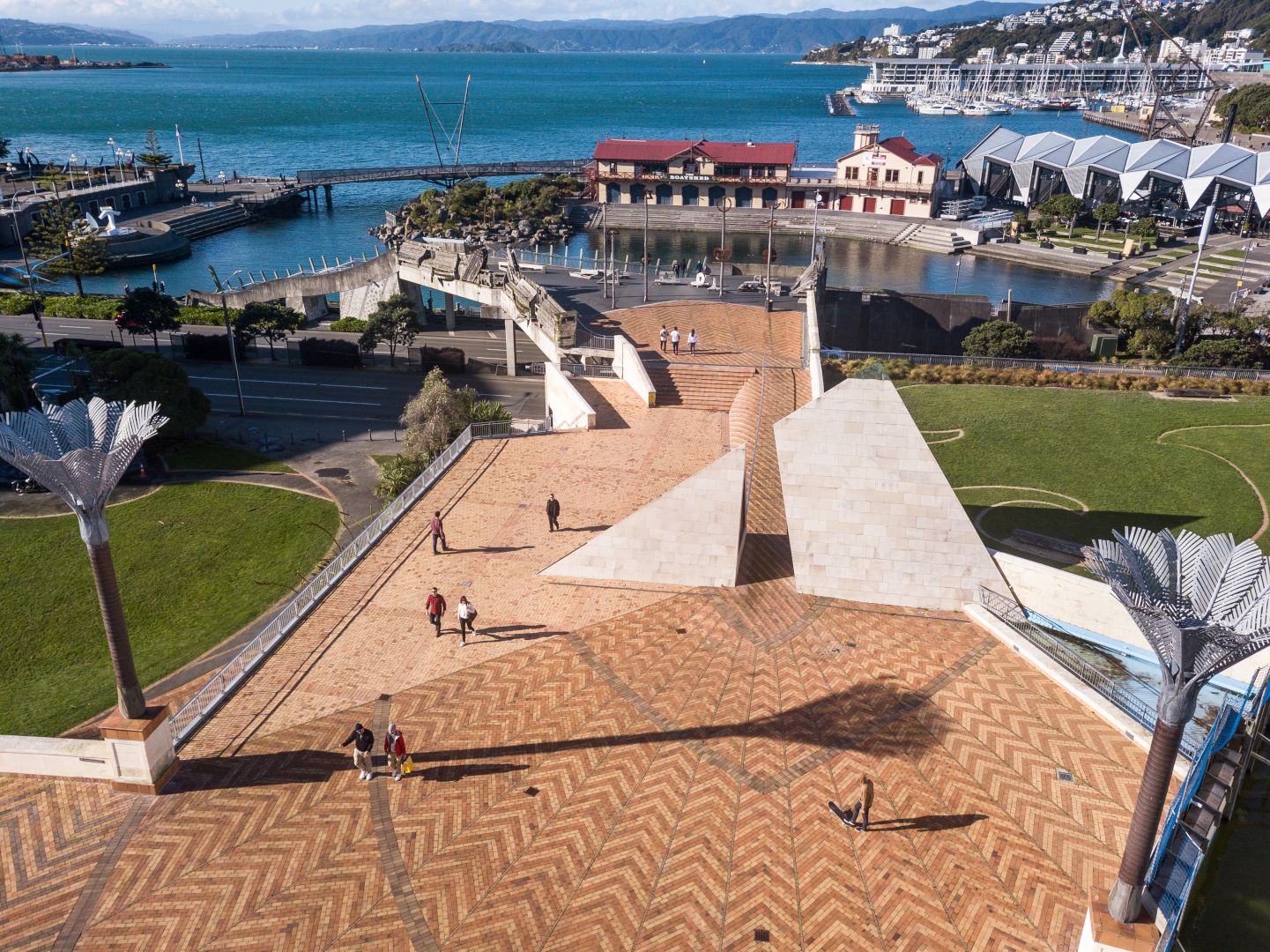
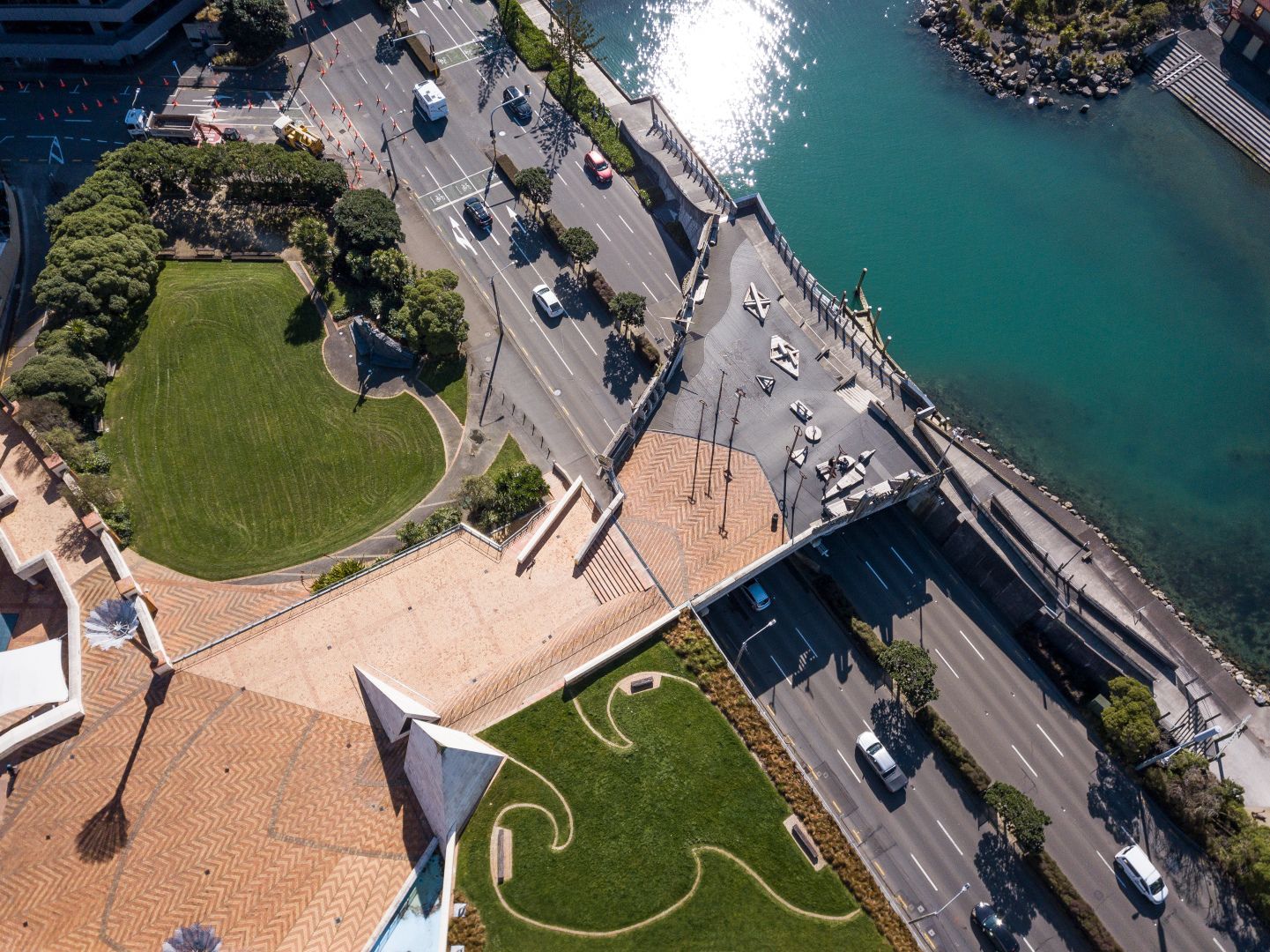
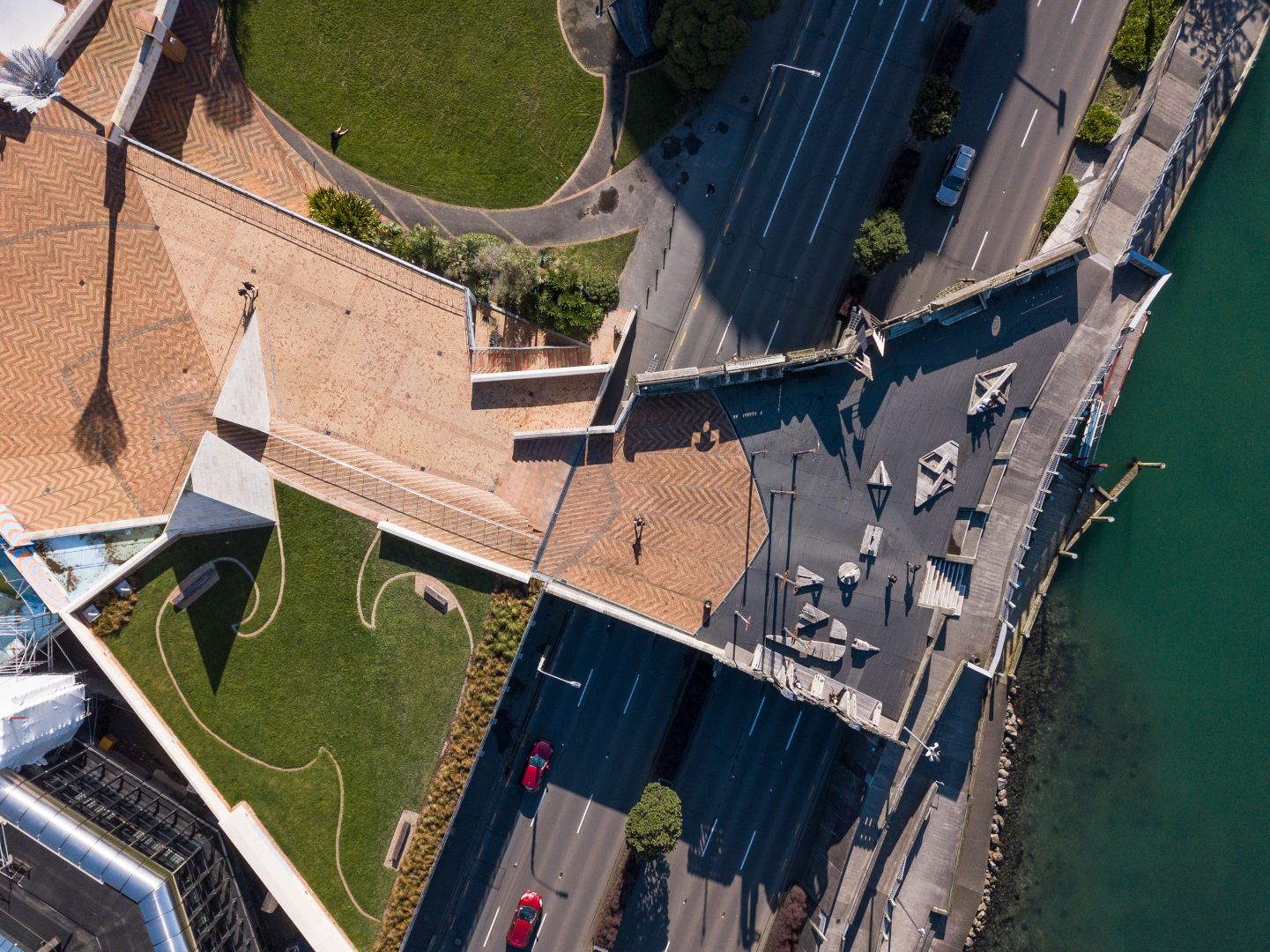
Toi Te Rito Maihi, Untitled [City-to-Sea Bridge/Te Aho a Maui plaza] (c.1991), Te Whanganui-a-Tara Wellington
Photo: Paul McCredie, from J. Hansen and J. Kake, ‘Rewi: Āta Haere, Kia Tere’ (Massey University Press: 2023)

- DETAILS
- MAP
Description
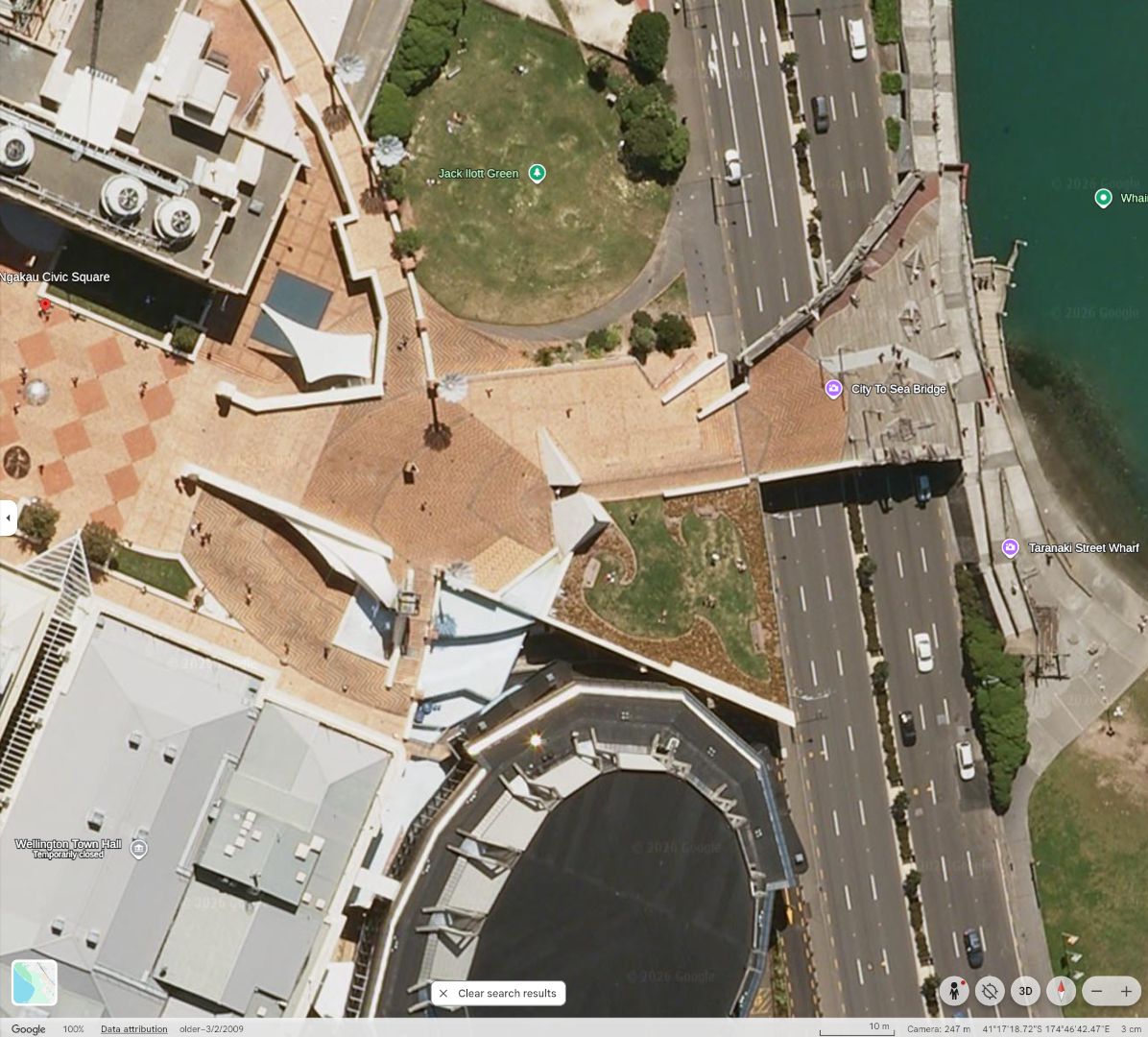
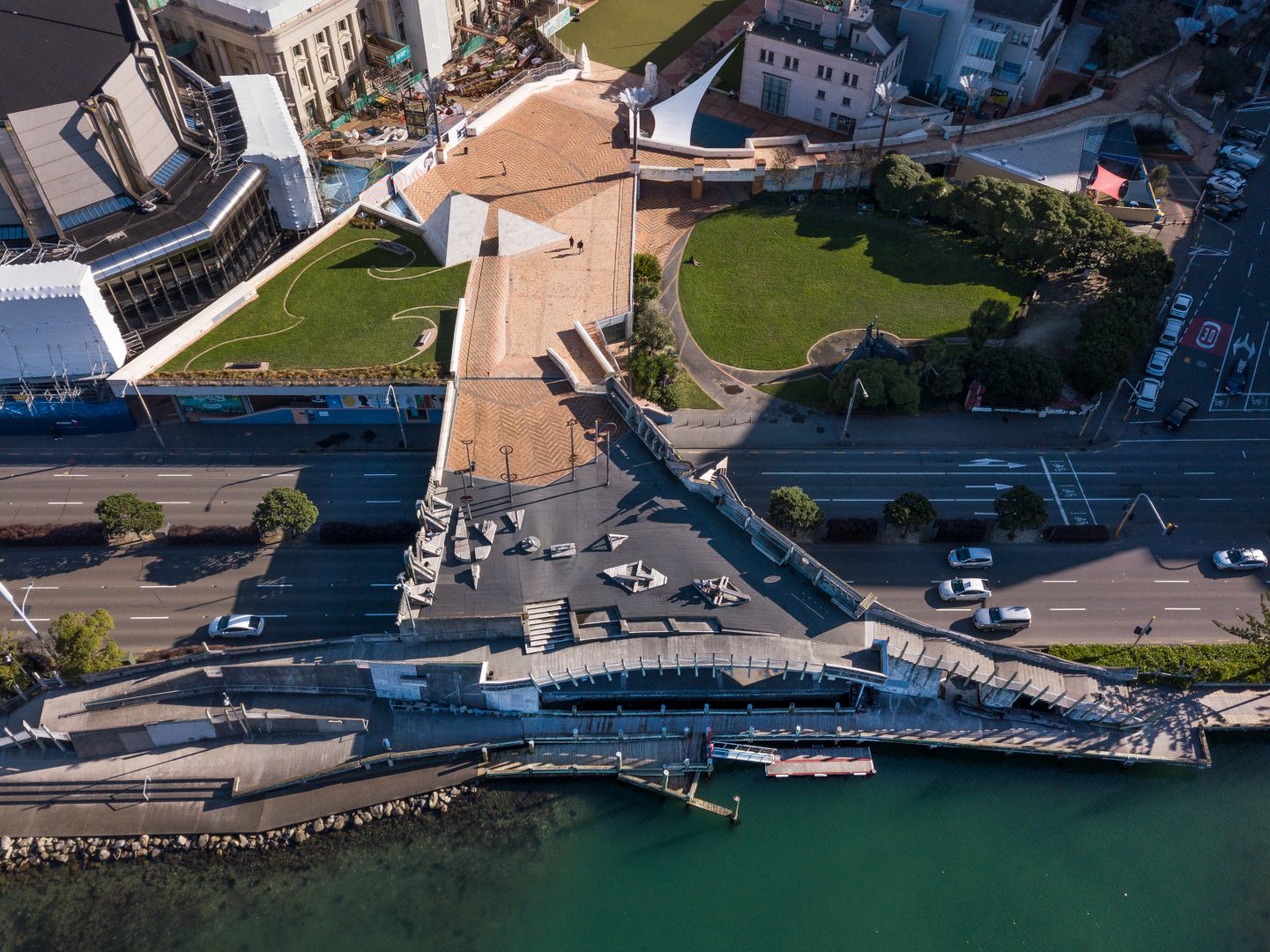
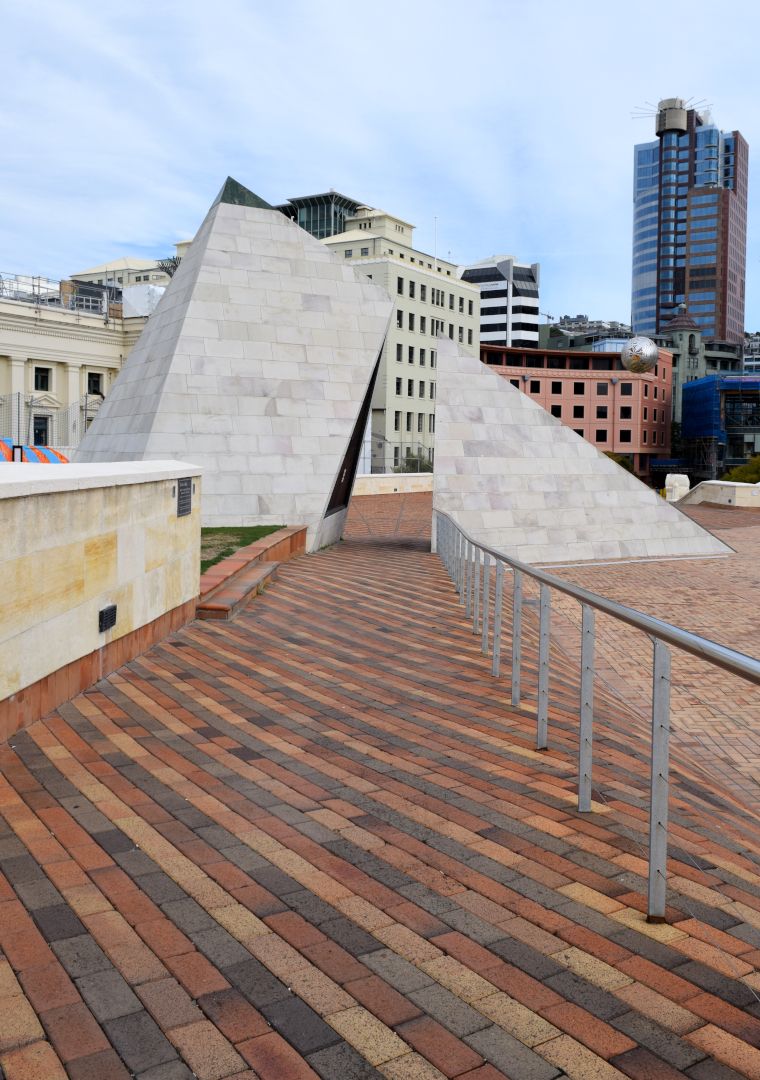
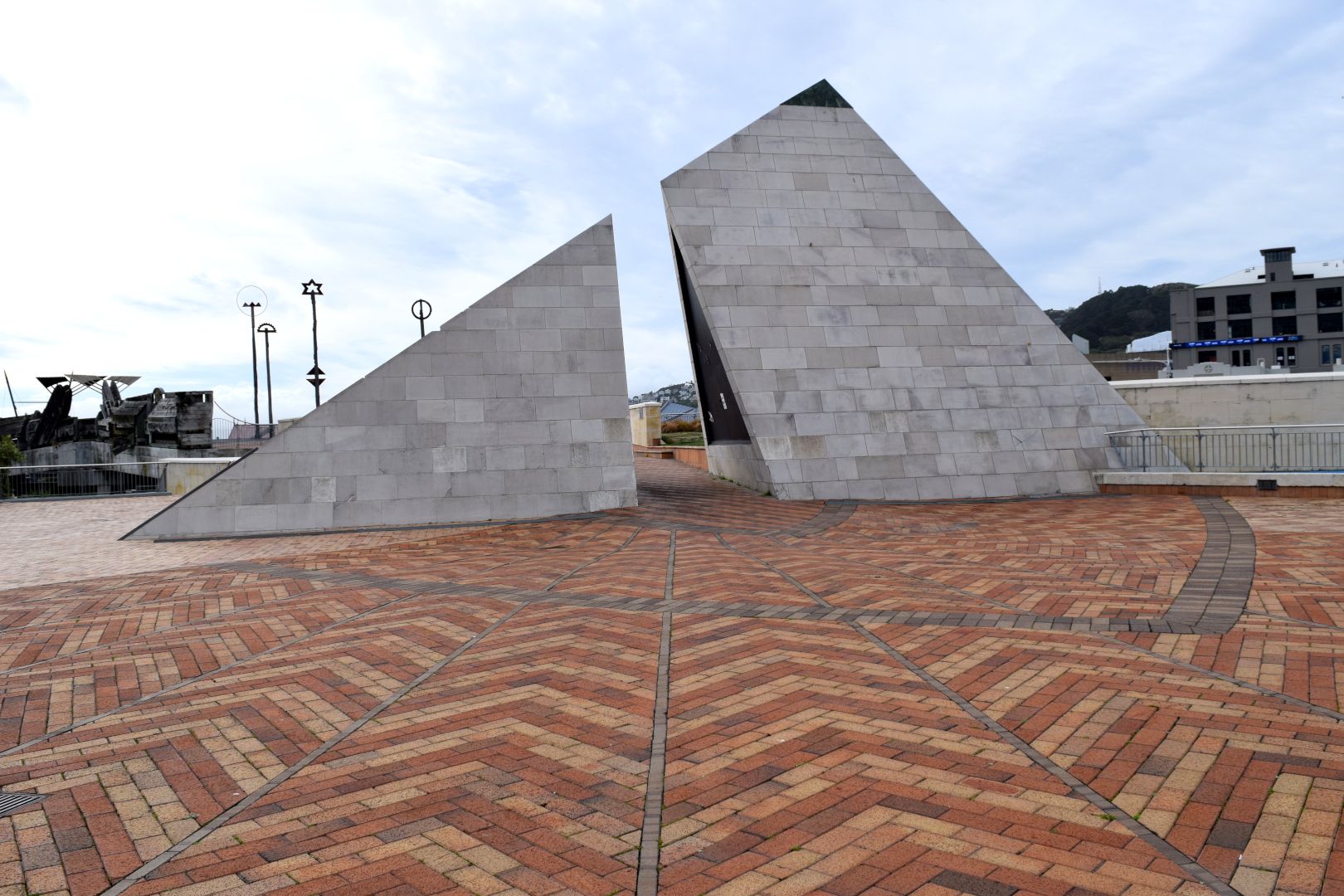
Maihi's paving scheme is an elaborate design in three dimensions representing Māui's fishing line–te aho a Māui–with the silhouette of a matau (fish hook) presented on the adjacent grassed area and fixed into the 'body' of the land.
The aho then splays into an equally intricate kupenga (net) pattern, which continues to the top of the stairway leading down to Civic Square.The aho also bisects a cleft in Thompson’s 14-metre Te Aho a Maui maunga structure.
A master weaver, Toi Te Rito Maihi was an established full-time artist when she was invited to design the paving work for the redeveloped Wellington Civic Square. This is one of the first known instances in New Zealand where traditional tukutuku motifs were applied in a paving design.
As Rangihiroa Panoho states, “Around the country weavers are working in public spaces with new materials. This has been especially evident firstly in Wellington and, more recently, in the Viaduct in downtown Auckland. Both sites have involved the translation of key values and ideas found in weaving and latticework within the conventional meetinghouse. The transferral of motifs and ideas across materials (i.e. from harakeke fibre to kin-fired brick) is a regular feature of Māori art and architecture both today and e ngā ra o mua ‘in former times’.”
Source: Rangihiroa Panoho, ‘Māori art: History, Architecture, Landscape and Theory’, p.234 (David Bateman: 2015)
A process to refurbish the bridge commenced in May 2026. Some of the old pavers will be replaced with new pavers, while the original pattern of the paving artwork by Toi Te Rito Maihi will be retained. The paving artwork will need to be lifted to access and repair the materials underneath. The artwork’s original pattern will be reinstated, but with stone pavers instead of clay pavers to reduce the weight on the roof of the building underneath.