
New Zealand National Memorial to Rear Admiral Richard E. Byrd
Thomas Vincent Johnston
Bruce E. Orchiston
1961–Current
- Mt Victoria Lookout, Mt Victoria, Te Whanganui-a-Tara Wellington
Type
- Sculpture
Medium
- Bronze
- Stone
- Stucco
- Ceramic tile
Dimensions
- H5115 x W3620 x D7830mm; Bust: H530 x W440 x D390mm

Johnston, Orchiston, Blumhardt, et. Al, ‘Richard E. Byrd II Memorial’ (1993), Mt Victoria, Te Whanganui-a-Tara Wellington
Image: Bronwyn Holloway-Smith, Public Art Heritage Aotearoa New Zealand, Nov 2025
- DETAILS
- MAP
Description
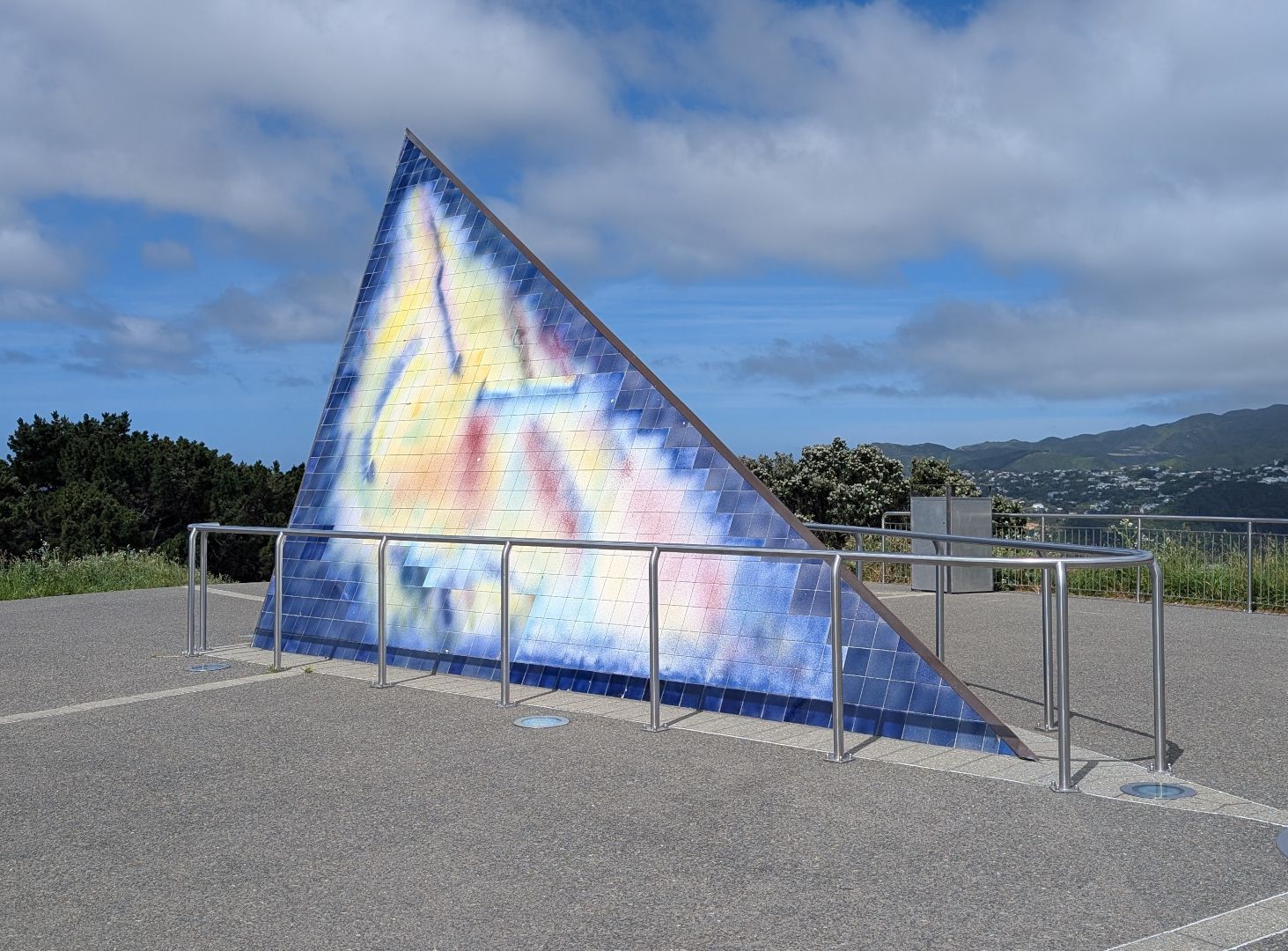
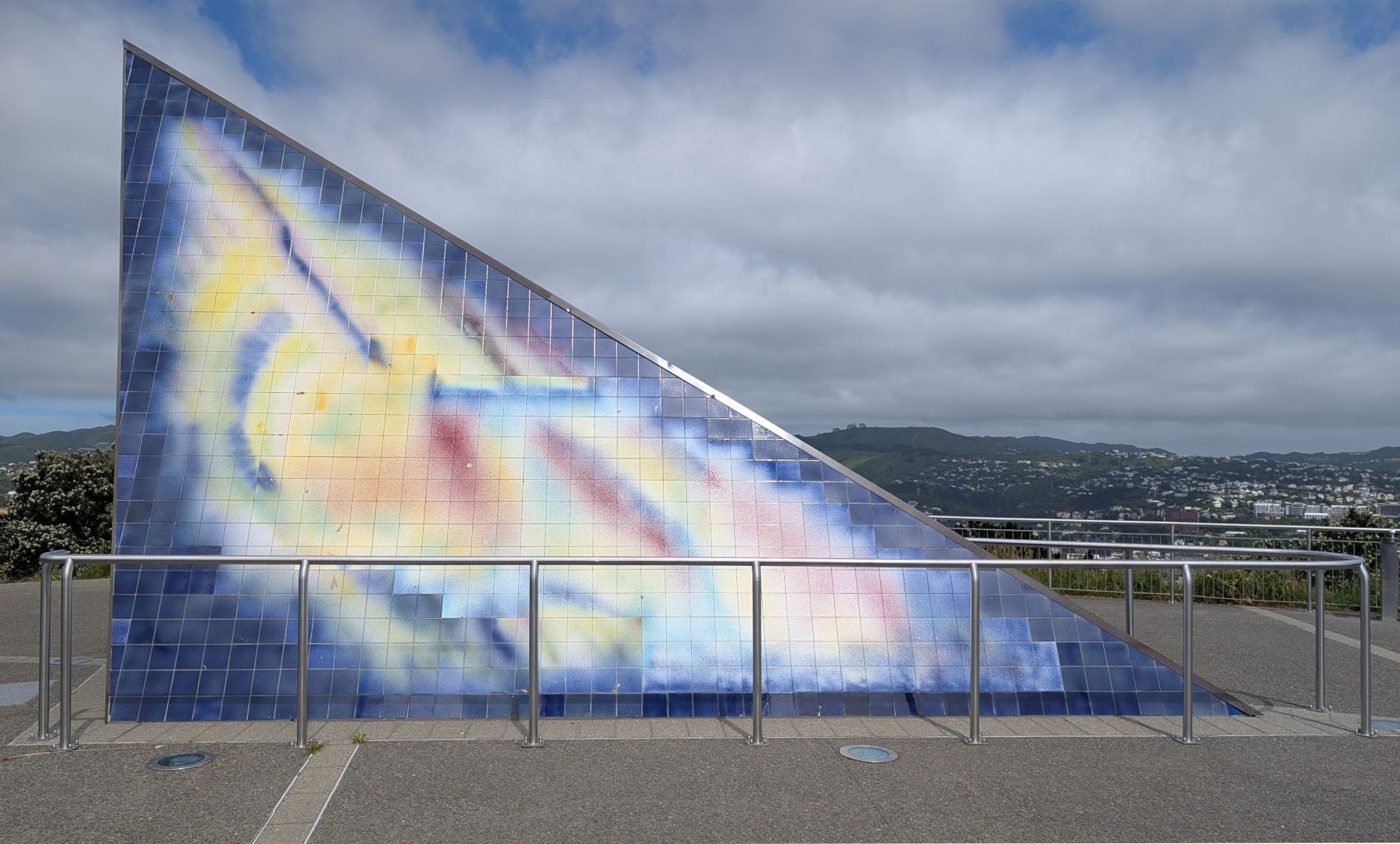
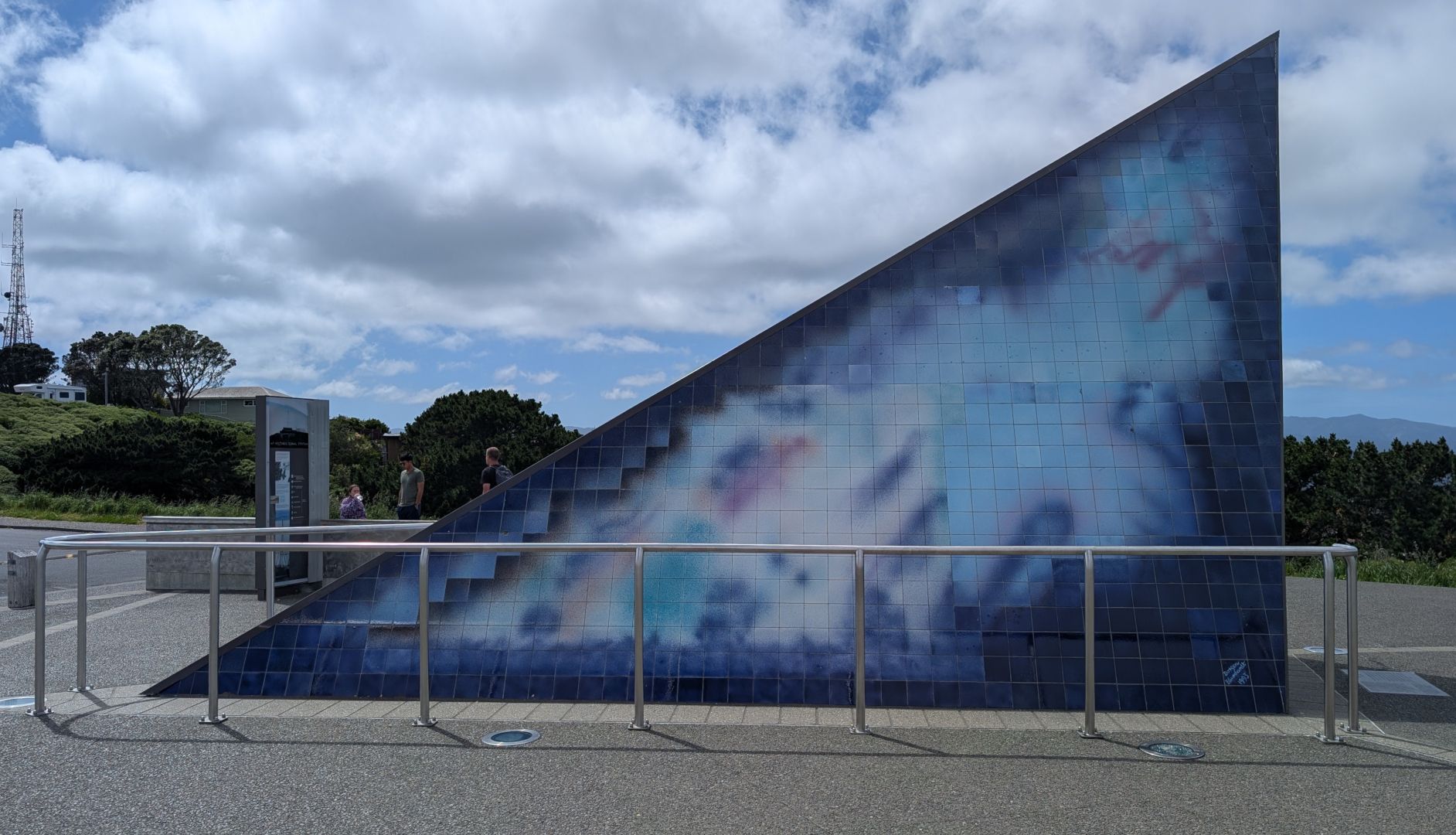
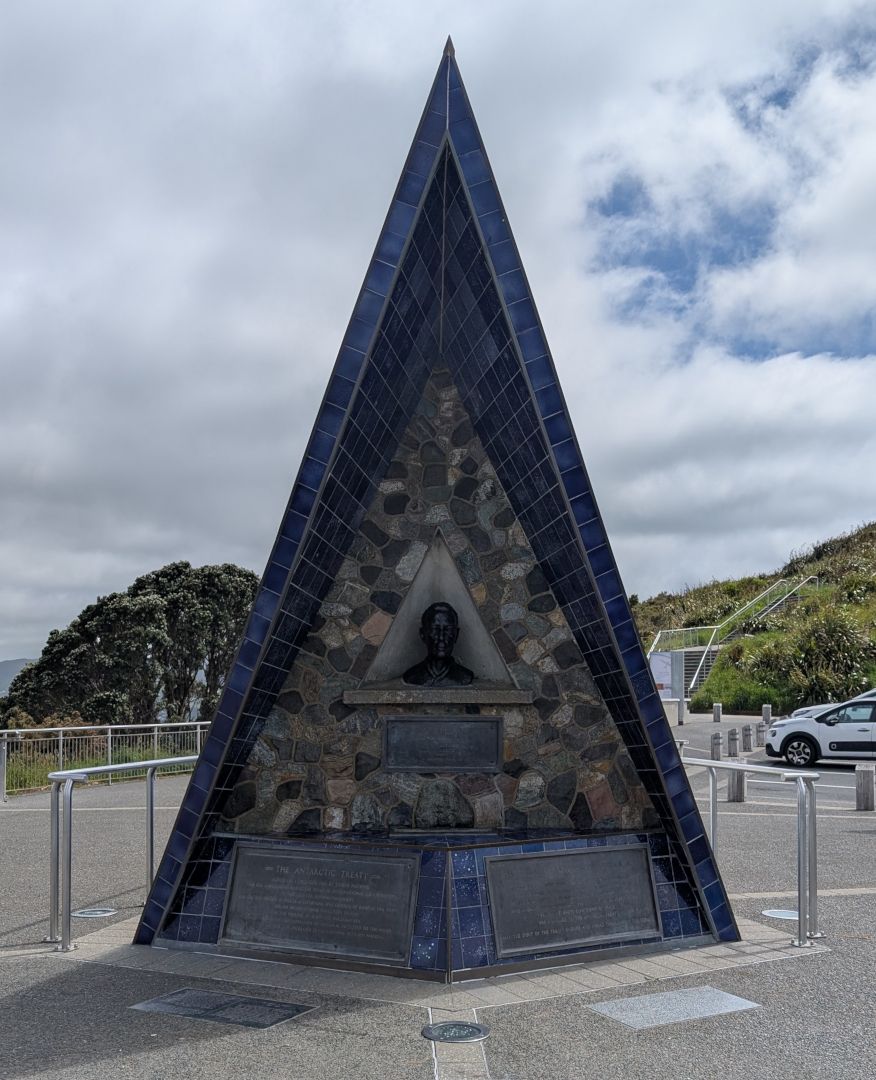
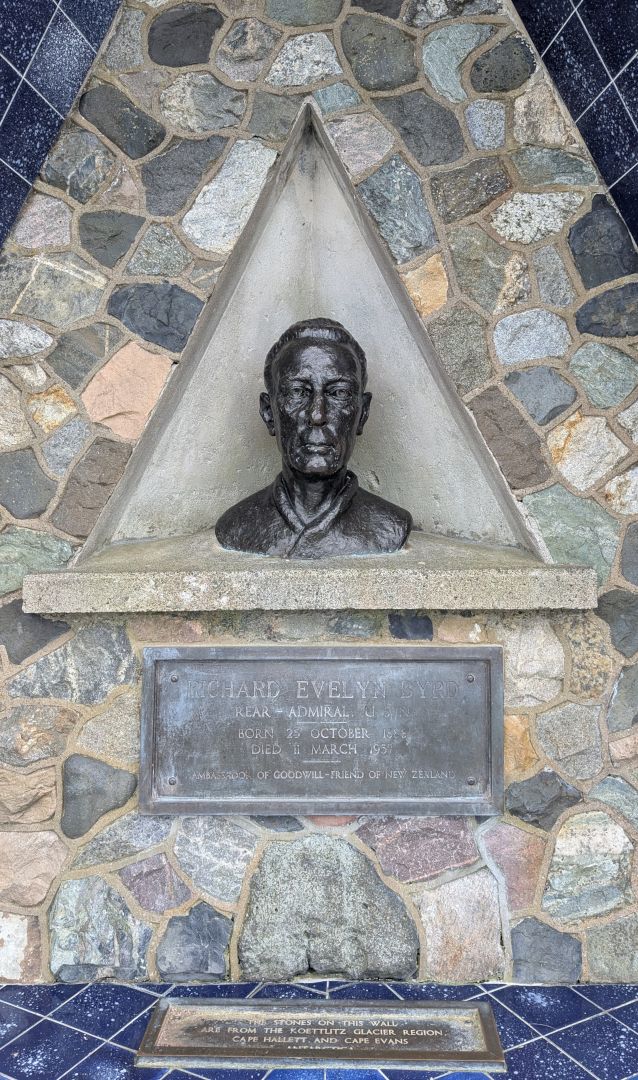
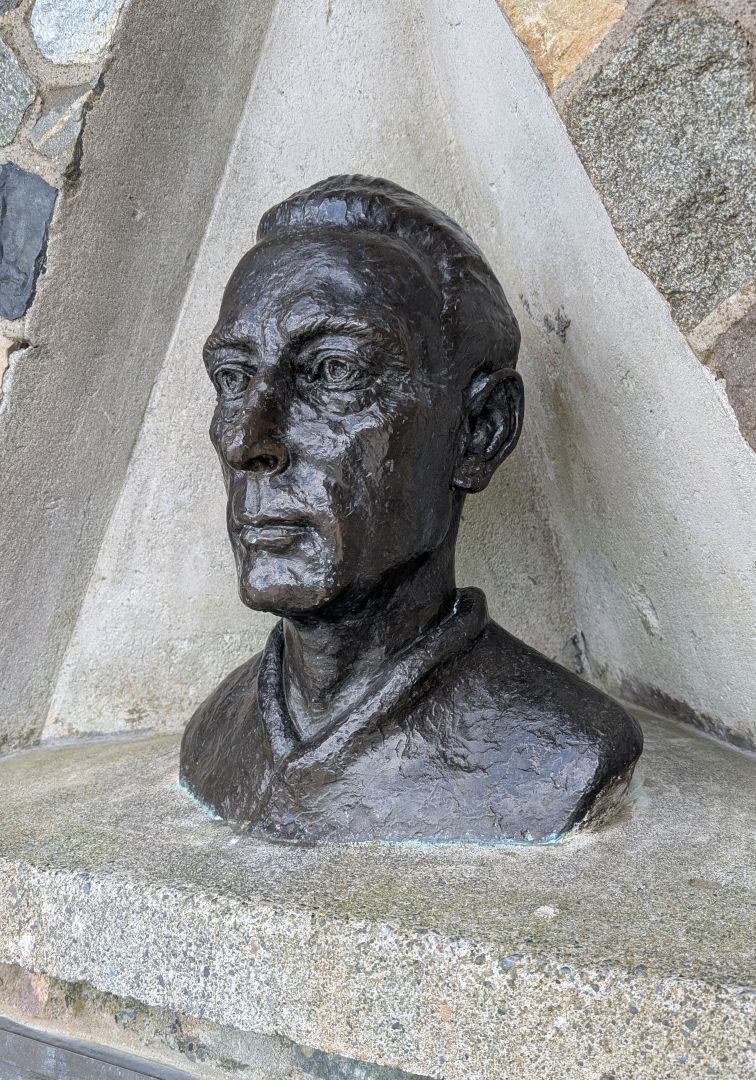
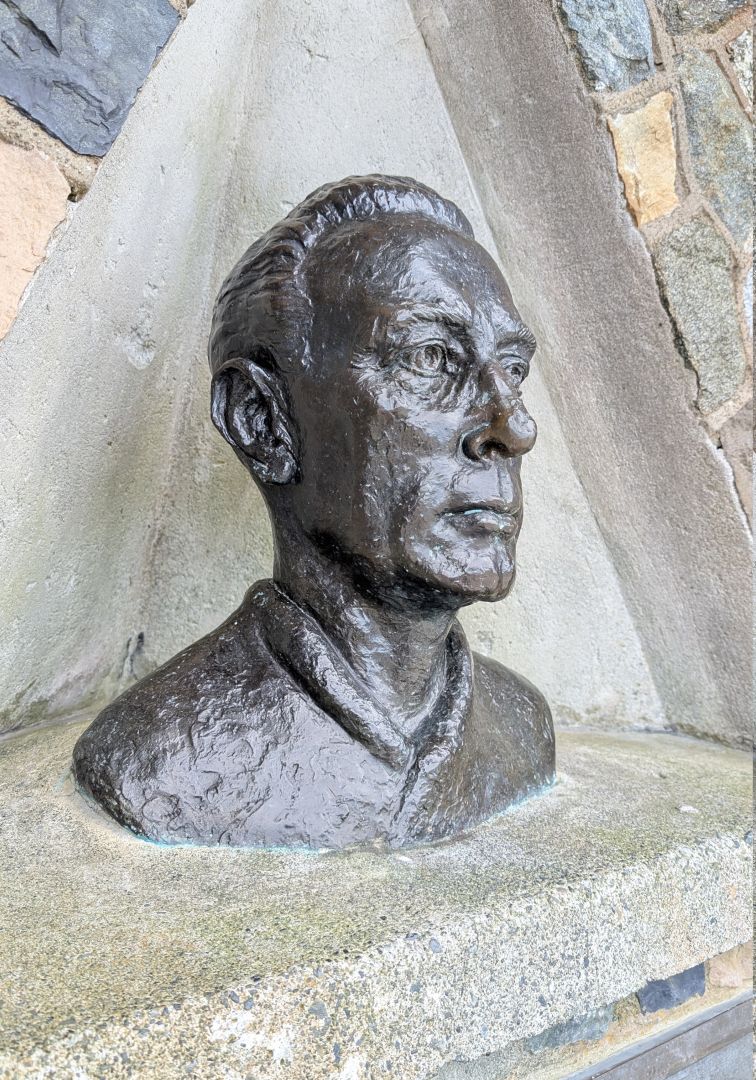
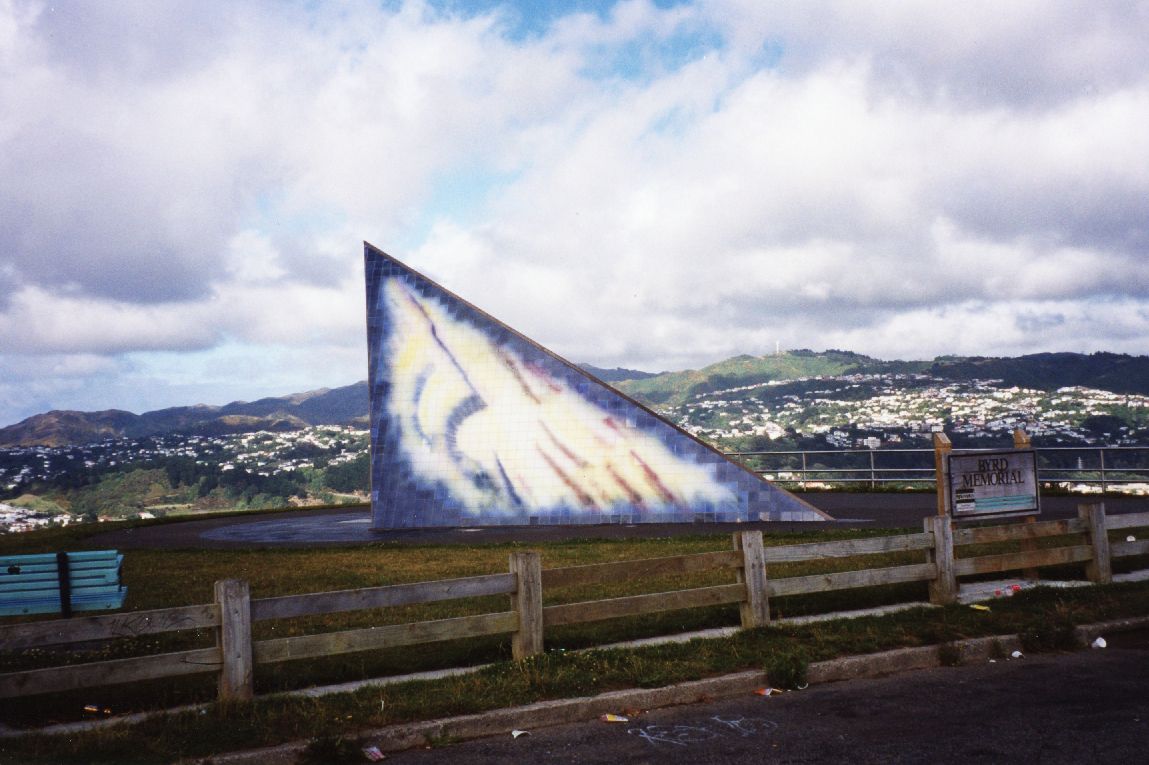
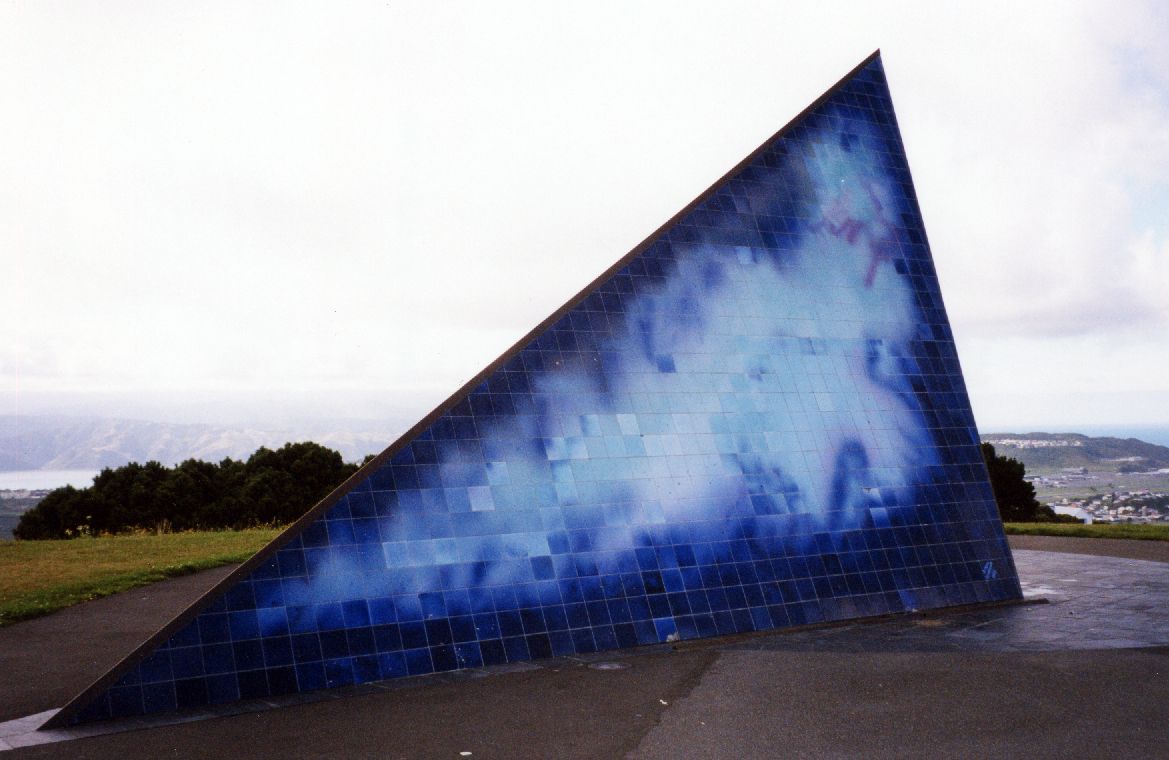
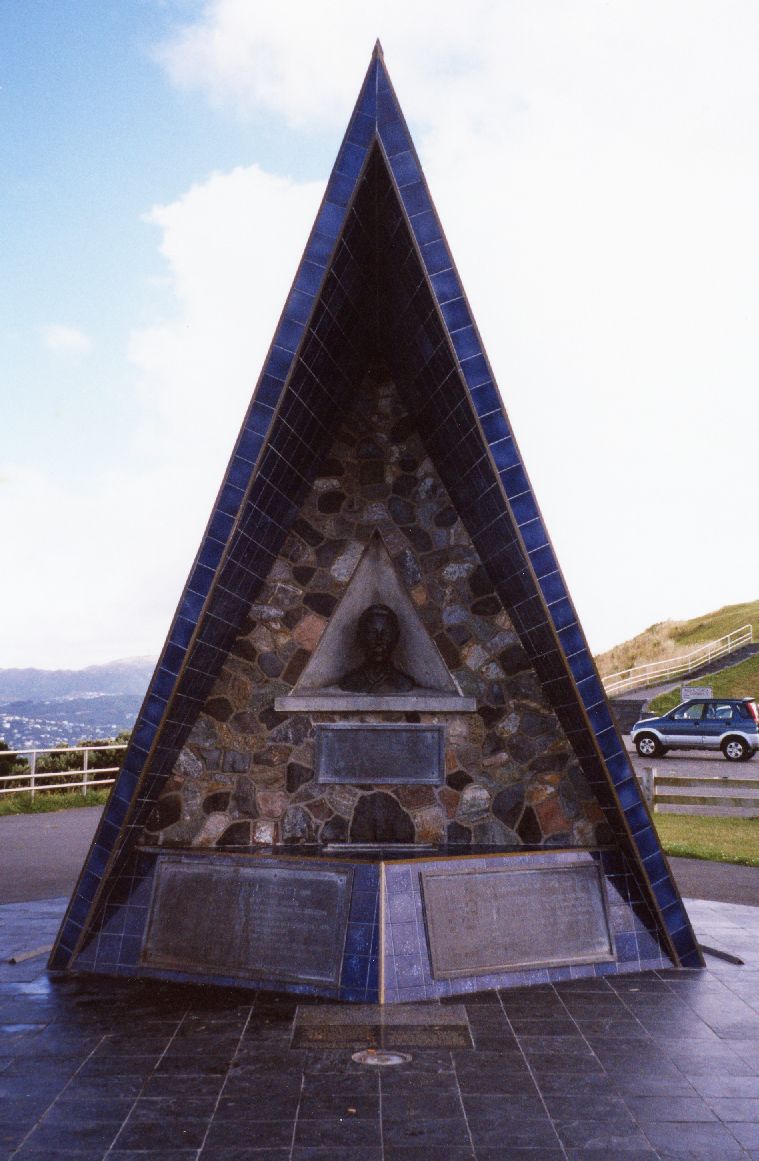
The New Zealand National Memorial to Rear Admiral Richard E. Byrd stands below the lookout at the peak of Mt Victoria. Unveiled in 1962, on the fifth anniversary of Byrd’s death, the monument was designed to resemble a blizzard-driven tent orientated to the south pole. The sides were originally covered in white stucco and embedded rocks sourced from Antarctica. At the centre of the monument is a bronze bust of the American explorer Admiral Richard Byrd (1888-1957), positioned facing out of the polar tent towards the sea, and Antarctica. The side containing the bust is clad with rocks sourced from Antarctica. Several plaques were also inlaid with the monument.
Byrd led five scientific expeditions to the Antarctic between 1928 and 1956, all launched from Aotearoa. He was also the first man to fly over both North and South Poles, and was a vocal advocate for the Antarctic Treaty, representing New Zealand in Washington when negotiations took place.
Following Byrd’s death, a group formed the Richard E. Byrd Fellowship New Zealand, with a view to creating a monument to his legacy. Conceived by New Zealander A. Leigh Hunt (1876-1968), the memorial was envisioned as a mark of respect to the famous explorer.
Bruce Orchiston designed the memorial gratis on the understanding that the plaque recorded his involvement. The random coloured stone feature walls were a feature of late 1950’s American architectural design, and he also used them around his Eastbourne House built at a similar time. The Antarctic-sourced stones embedded in the “tent” walls soon became an invitation to climbers.
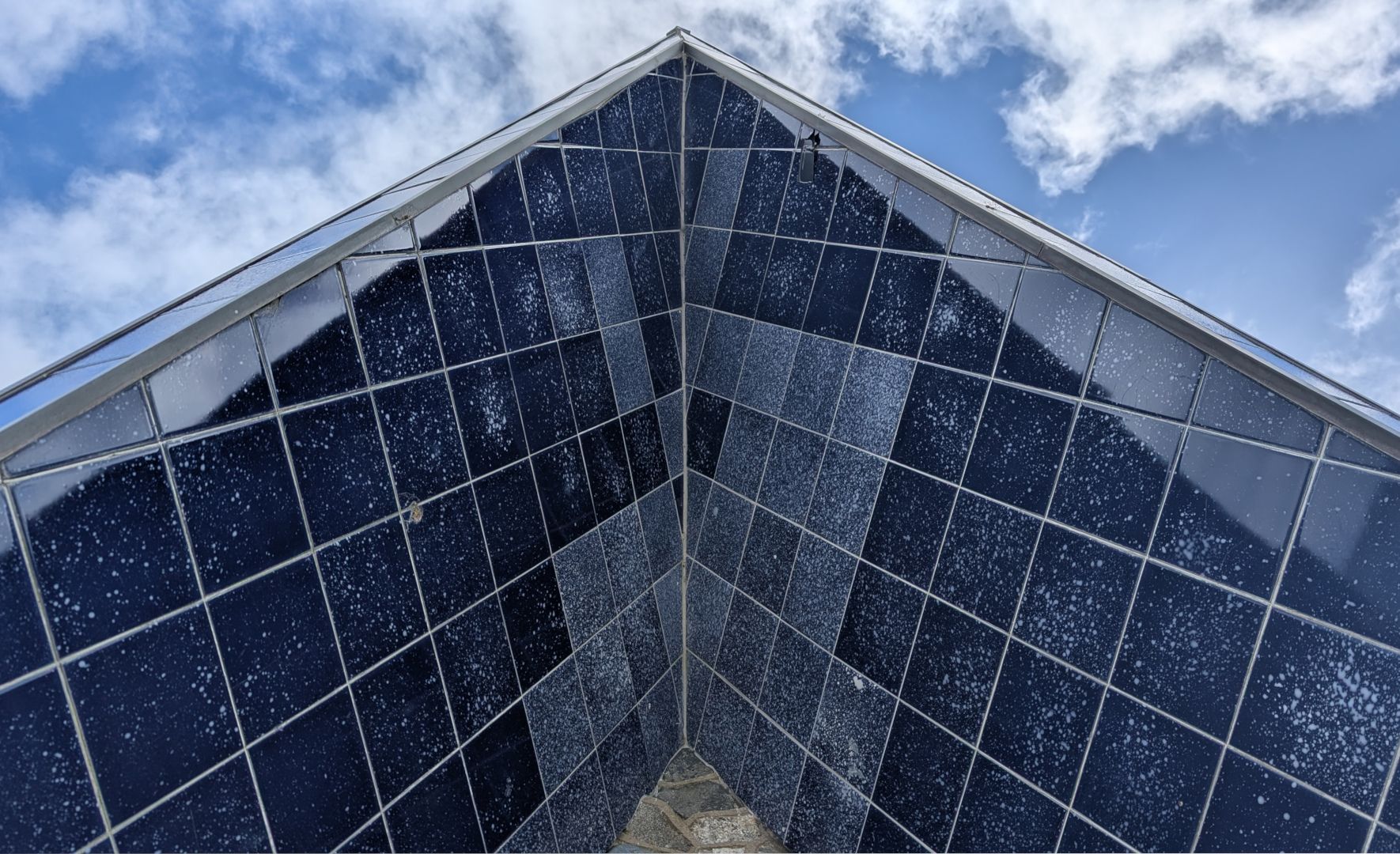
In the early 1990s, due to damage and deterioration, the memorial underwent restoration work. As a result, Doreen Blumhardt was commissioned to create a ceramic tile mural depicting the Aurora Australis/Southern Lights, and produced the 2200 ceramic tiles. The refurbished memorial was unveiled by then-Wellington Mayor Fran Wilde in 1993.
Over the following decade the tiles were vandalised twice, with over 400 tiles said to be damaged. Each time they were repaired by the artist, now in her eighties. Following this, fencing and other architectural deterrents were put in place.
Further engagement signage has also since been added that reiterates, and expands on, the installed plaques.
The original plaques read:
–
RICHARD EVELYN BYRD
Rear-Admiral, U. S. N.
Born 25 October 1888
Died 11 March 1957
Ambassador of Goodwill –- Friend of New Zealand
–
The stones on this wall are from the Koettlitz Glacier region, Cape Hallett, and Cape Evans Antarctica.
–
THE GREATEST EXPLORER OF THE AIR AGE
Richard Evelyn Byrd dedicated his life to peaceful progress for mankind. Outstanding in aviation and exploration; he was a scientist, a humanitarian, a champion of freedom and a great internationalist. His concept of Antarctica as “the great white continent of peace” was a prelude to the Antarctic Treaty.
May the spirit of the Treaty endure and spread throughout the world.
–
THE ANTARCTIC TREATY
Signed on 1 December 1959 by twelve nations, this was a milestone along the road to international co-operation. It provided for non-militarisation, for the prevention of nuclear explosions and disposal of radioactive waste, for an international inspection system, for the pooling of scientific information. It demonstrated the subordination of national interests to the wider cause of science and increased understanding between nations.
–
BYRD MEMORIAL [The text on this plaque is particularly difficult to read]
DEDICATED 11th MARCH 1962
Unveiled — Rt. Hon. Keith Holyoake , Prime Minister
Dedicated — Rev. W.E.D. Davies, National Council of Churches
Architects — Orchiston Power & Associates
Builder — Wilkins & Davies Construction Co. Ltd.
Sculptor — Thomas V. Johnston. R.A.
Landscaping — Edward Hutt Esq., W. C. C.
Antarctic Stones — G.W. Markham Esq., Antarctic Divn. D.S.I.R
Conception — Richard E. Byrd Fellowship New Zealand
–
The newer plaques, added to the memorial in 1993, read:
–
This memorial to the Late Rear Admiral Byrd was restored through the efforts of the New Zealand American Association Inc. and the New Zealand Antarctic Society Inc. Restoration was made possible by the generosity of Ameritech and Bell Atlantic New Zealand Ltd., Mobil Oil New Zealand Limited, National Geographic Society, Wellington City Council and numerous individual benefactors from the United States of America. It was rededicated on 21st June 1993 by the Hon Fran Wilde, Mayor of Wellington.
The artwork on the tiles symbolising the Aurora Australis or Southern Lights was designed and carried out by New Zealand Ceramic artists Doreen Blumhardt in conjunction with the WCC
Dr. Paul A. Siple
1908-1968
Paul Siple accompanied Admiral Byrd to the Antarctic on three expeditions in 1928-30, 1933-35, and 1939-41. He later undertook three other Antarctic expeditions including the leadership of the scientific team at the United States South Pole Station in 1950-57. Dr Siple became one of the foremost authorities on the geography of Antarctica polar logistics and the principles governing the adaptation of humans to life in cold regions.
—
See also: