
Queen Victoria Memorial
Alfred Drury
1911–Current
- Between Cambridge and Kent Terraces, near Alpha Street, Te Whanganui-a-Tara Wellington
Type
- Sculpture
Medium
- Bronze
- Stone
Dimensions
- 4 x plaques: H1150 x W910 x D50mm; Statue approx: H7000mm x W2800 x D3640mm

Alfred Drury, ‘Queen Victoria Memorial’, (1905) Kent & Cambridge Tce, Wellington
Image: Bronwyn Holloway-Smith, Public Art Heritage Aotearoa New Zealand, Nov 2025
- DETAILS
- MAP
Description
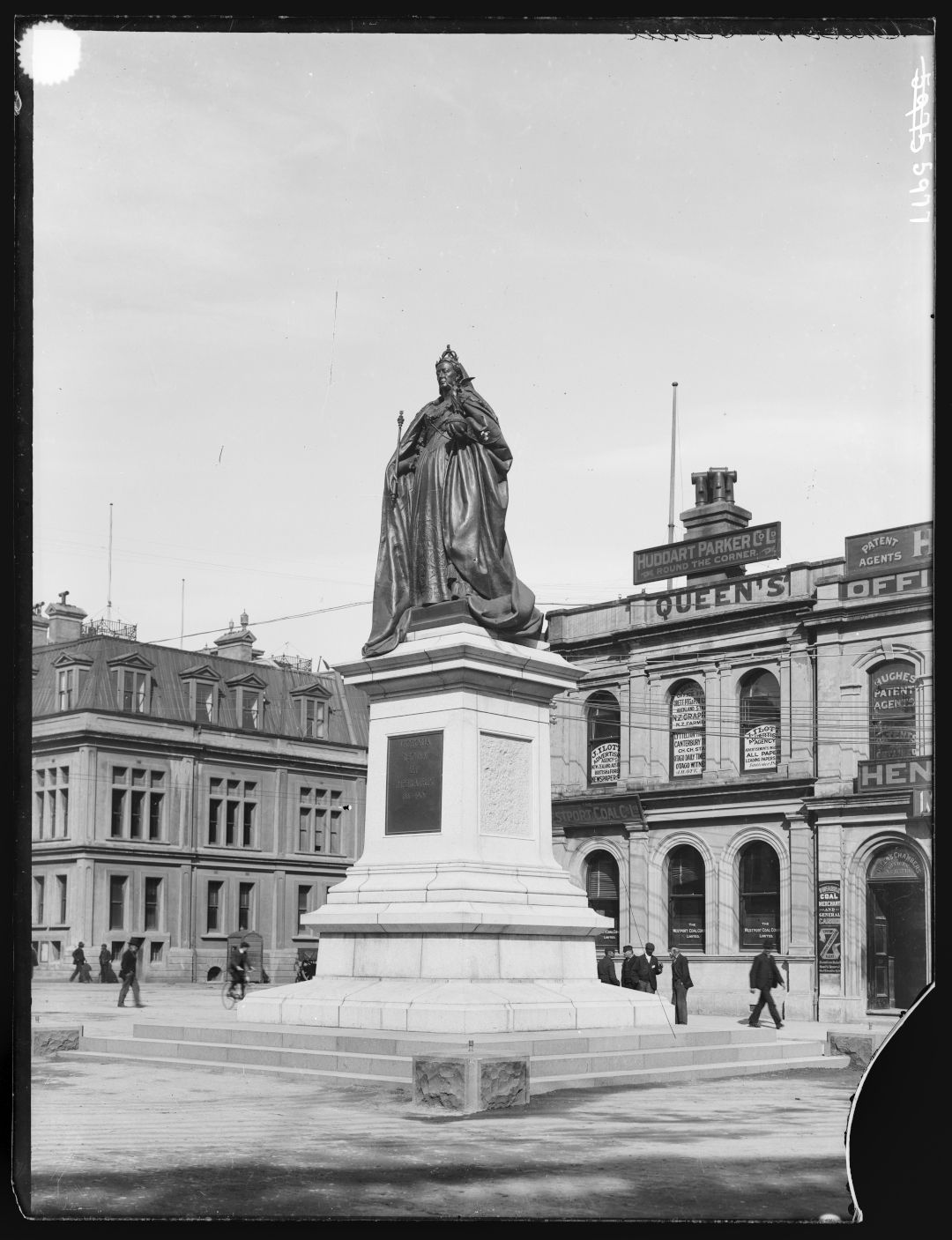
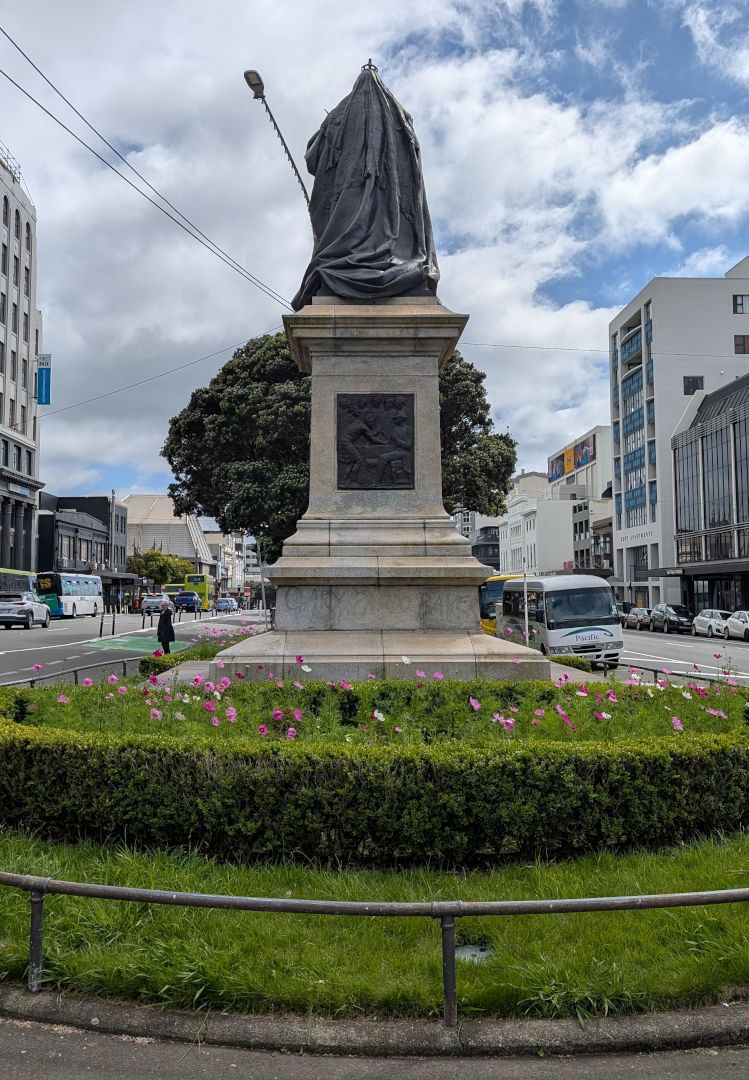
This memorial to the monarch Queen Victoria was possibly Wellington’s first official civic sculpture. Commissioned after the Queen died in 1901, it was originally intended as a national memorial to commemorate her reign, but a public outcry from people in other regions who felt they may never see it led Prime Minister Richard Seddon to announce it was just for the citizens of Wellington.
The Minister of Labour, William Pember Reeves, was given the job of searching for an artist who could create a statue for £3000. This sum was acquired through public donations. The commission was advertised in English newspapers and Drury ultimately won it in 1902.
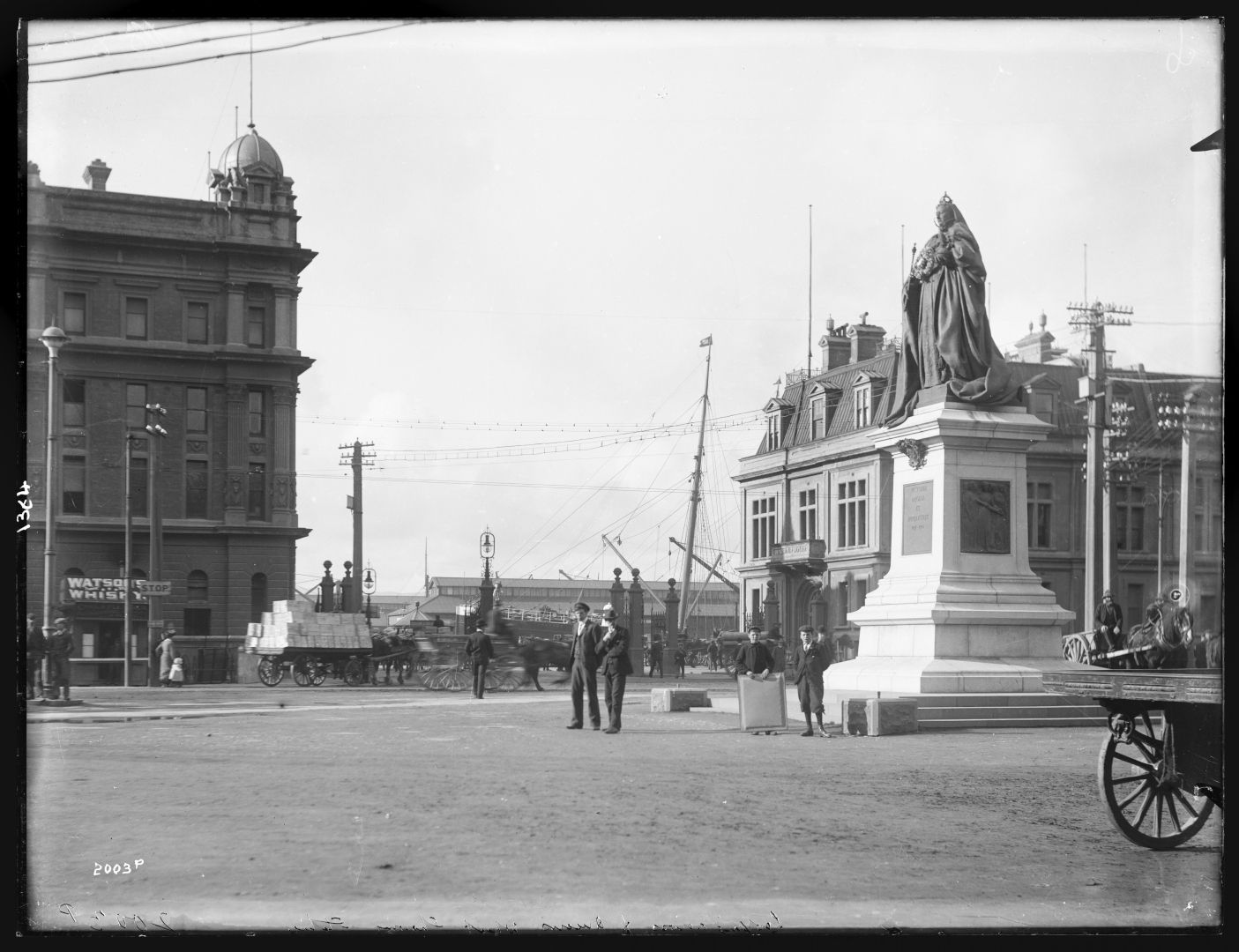
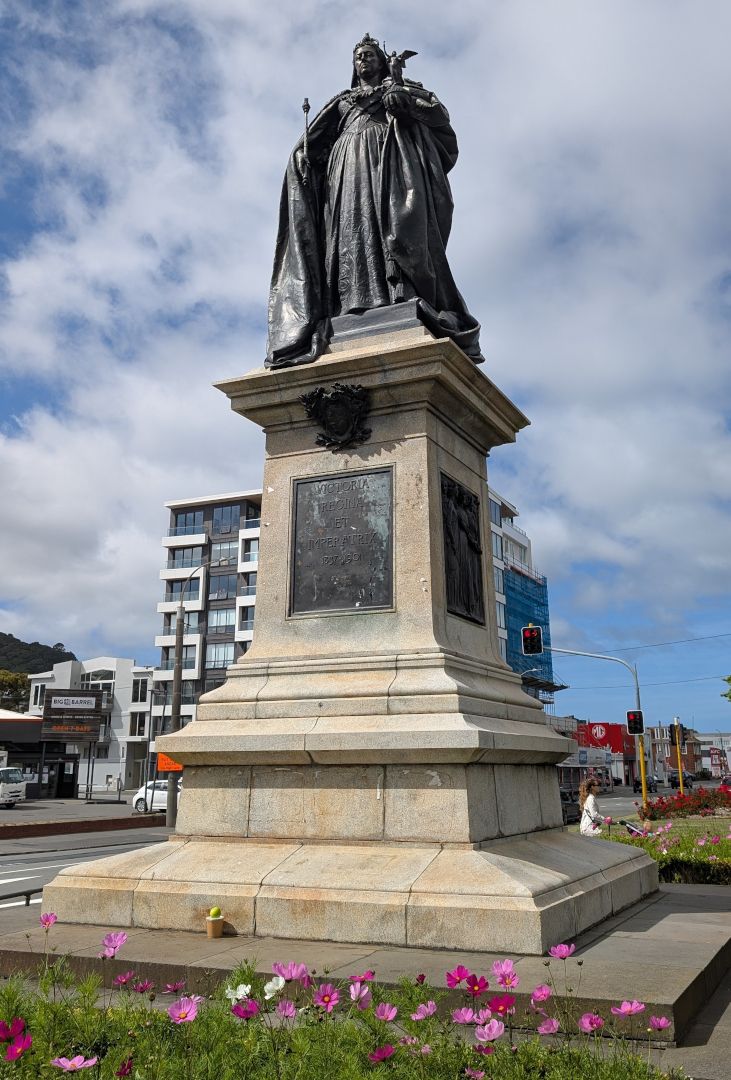
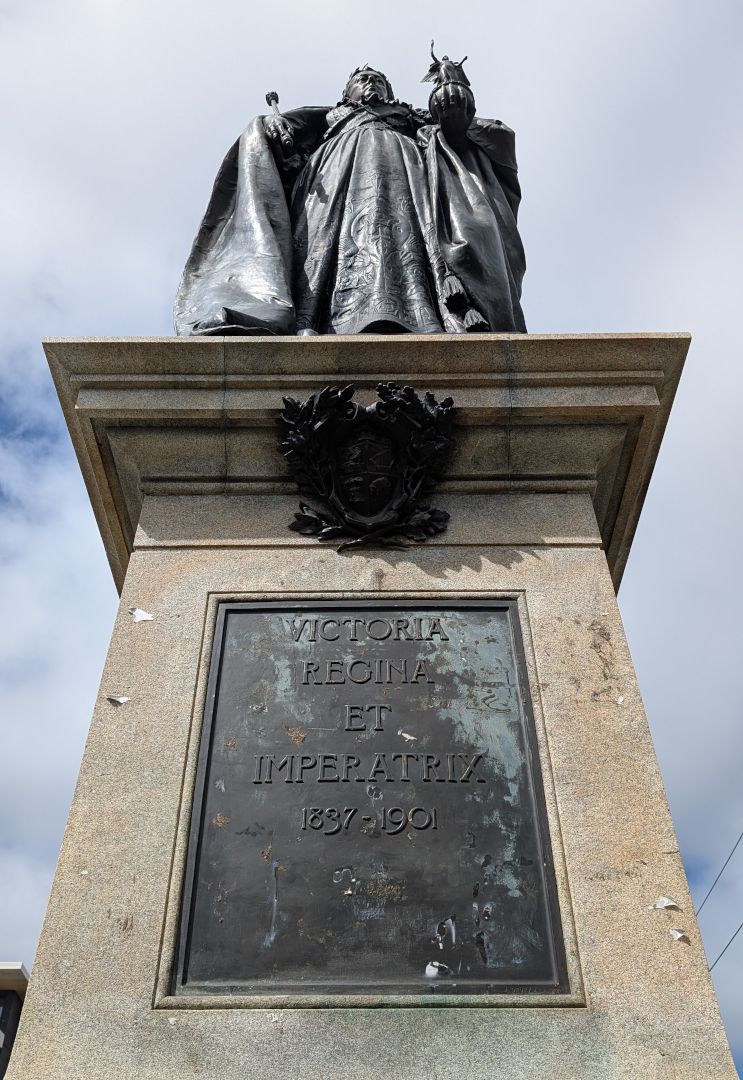
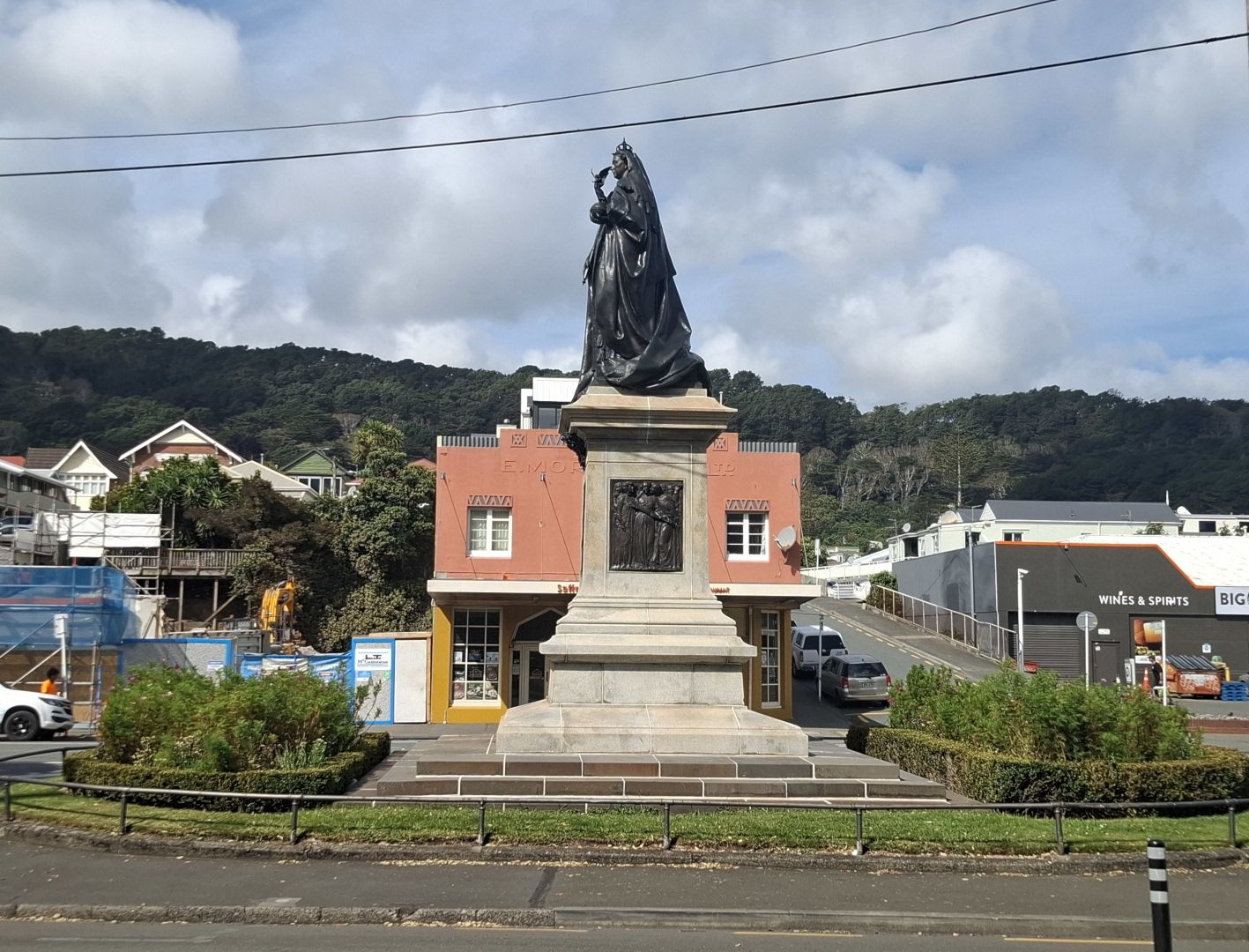
He created the work in two parts. The Queen wearing her robes of state with fine decorative detailing showing national emblems of New Zealand, and Aberdeen granite pedestal with plaque were unveiled by Governor Sir William Plunket in Post Office Square, Jervois Quay, with great pomp and ceremony on 29 April 1905. The plaques, however, were not ready in time and arrived at a later date.
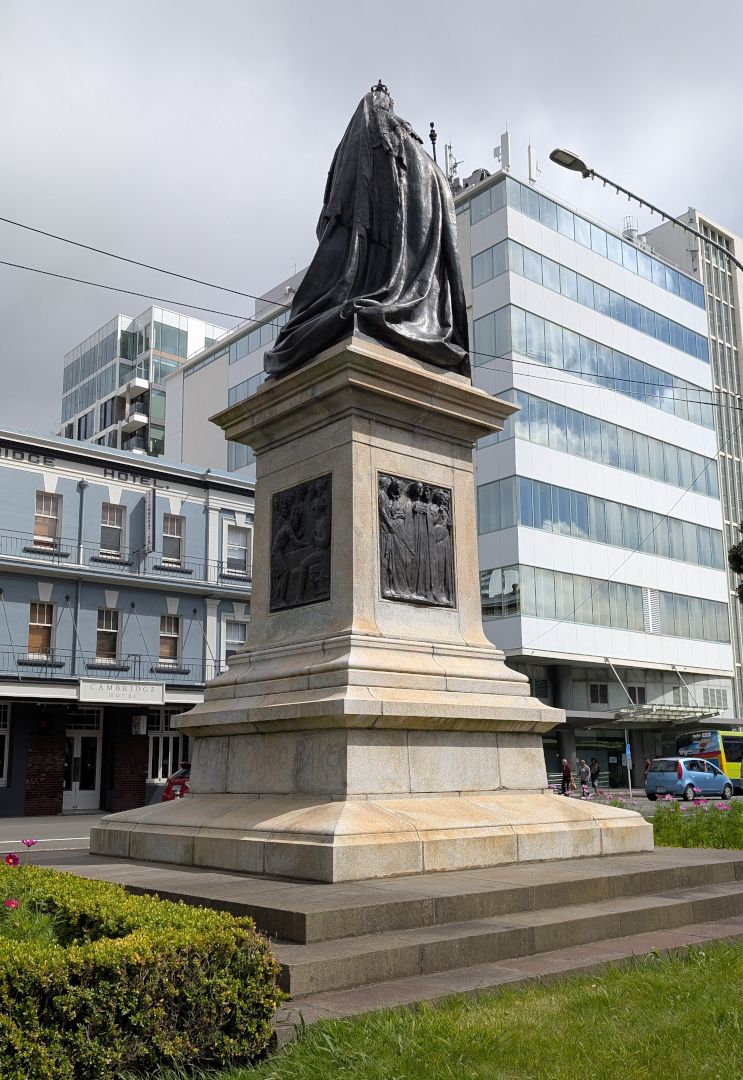
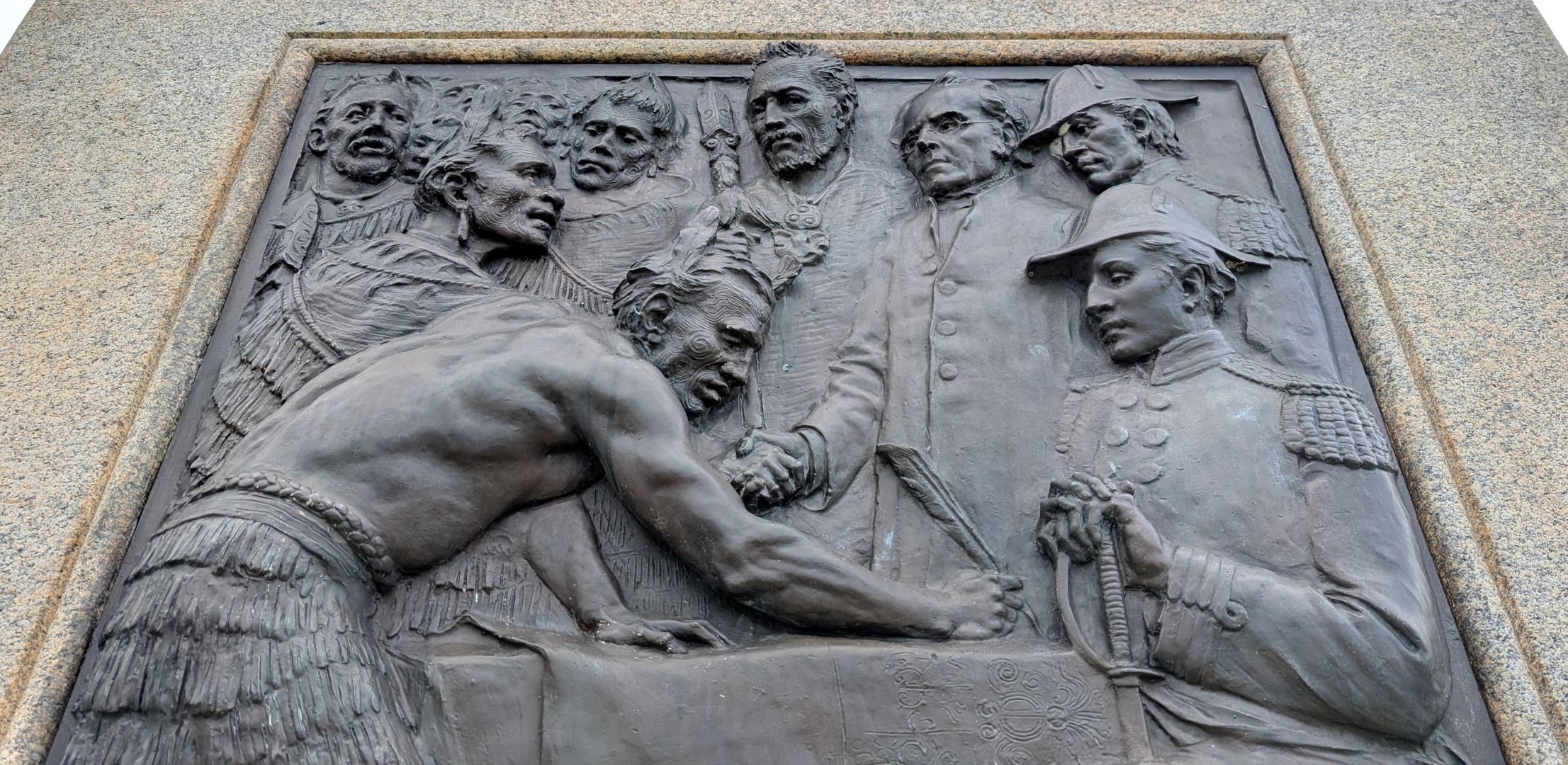
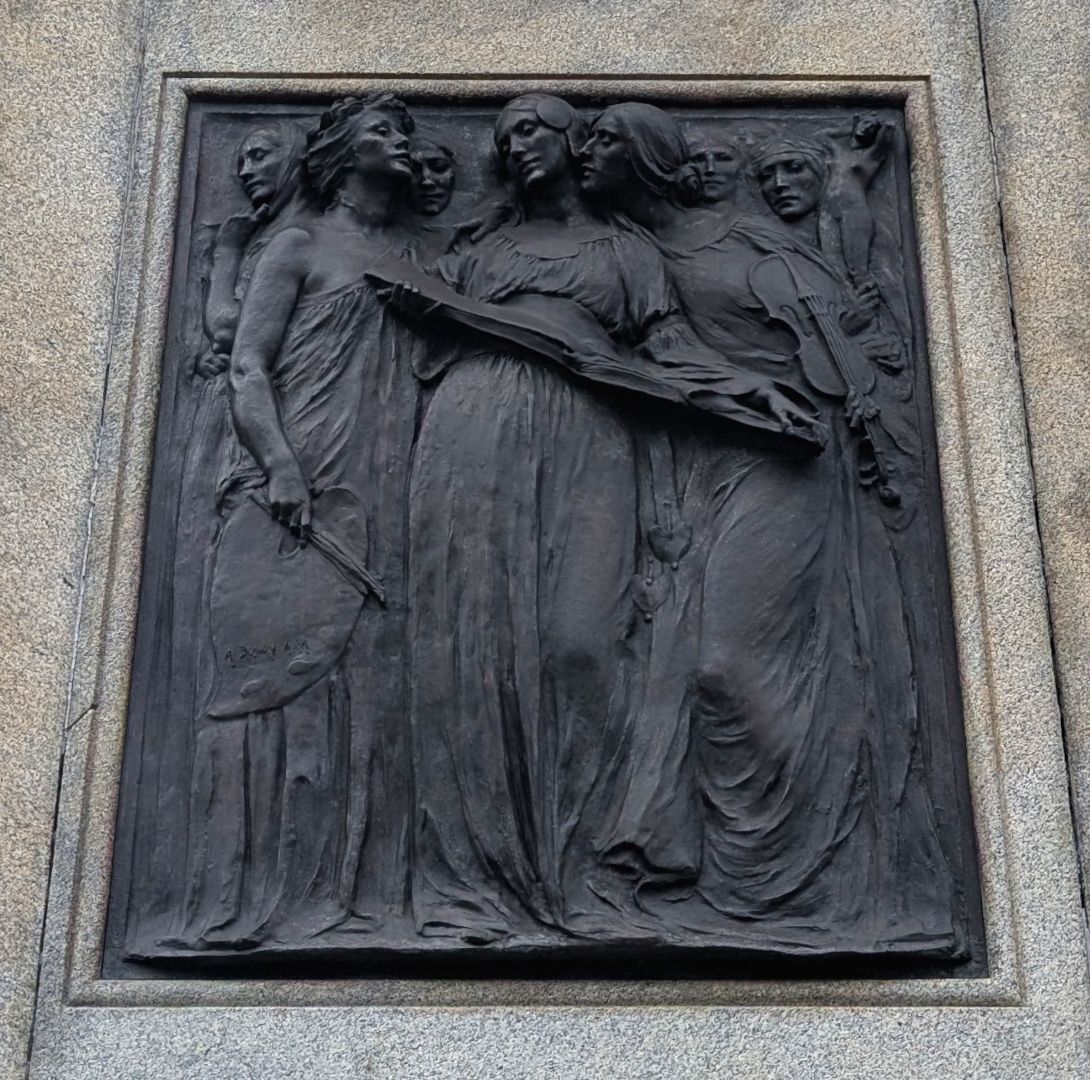
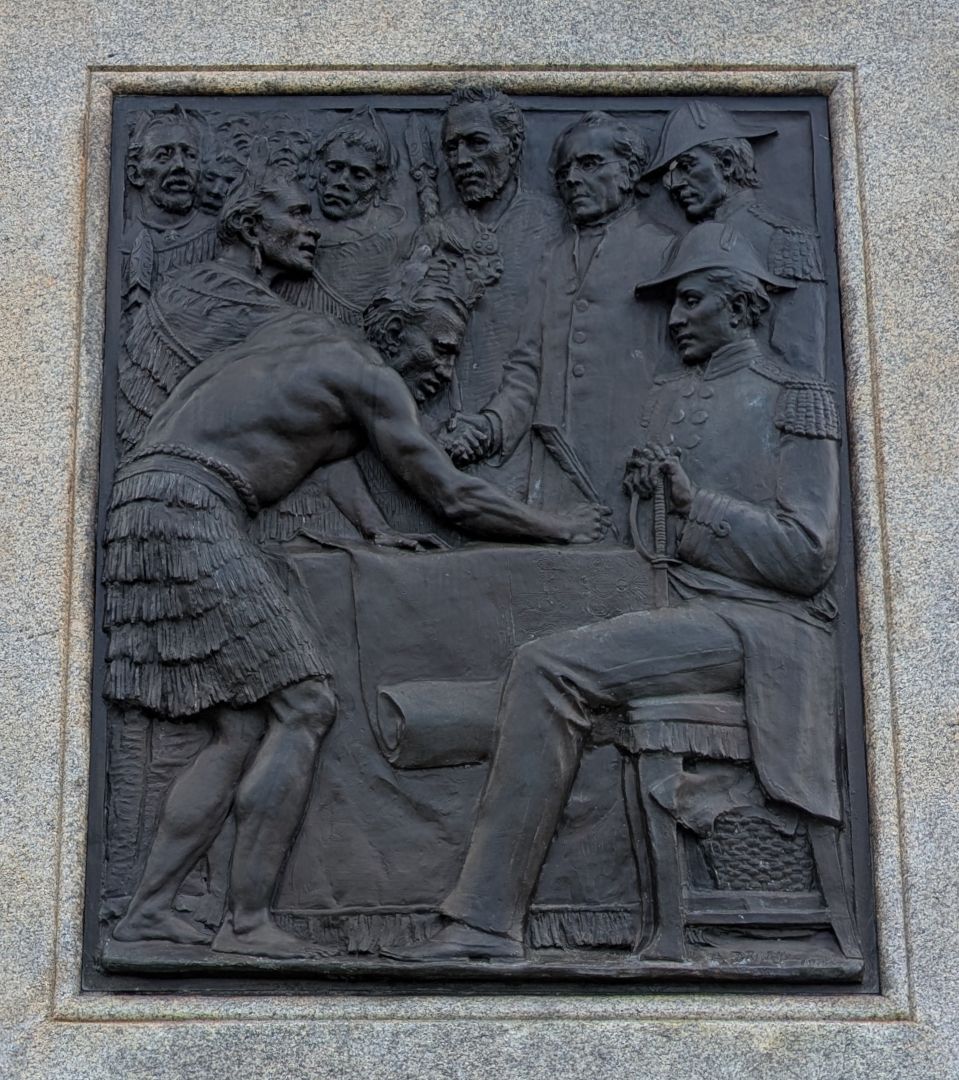
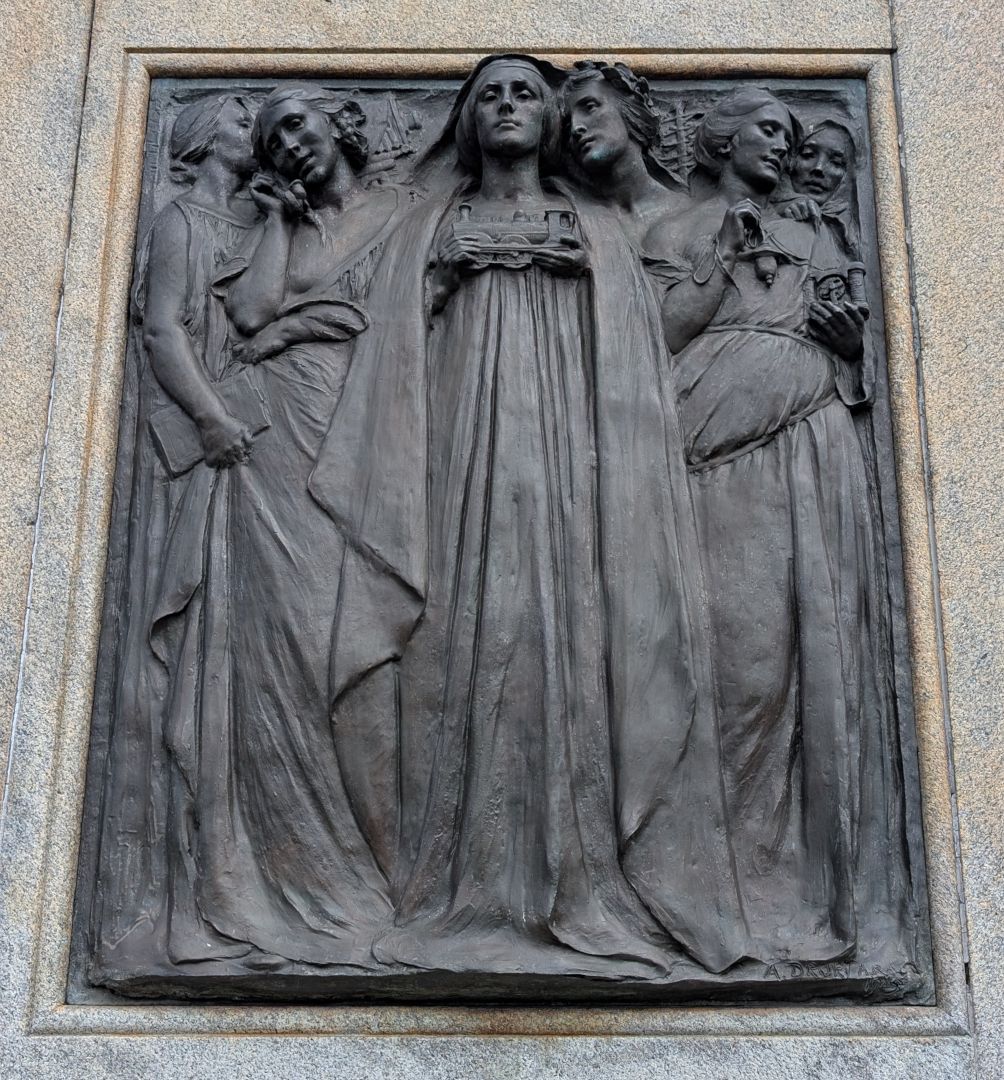
These three bronze reliefs show: The signing of the Treaty of Waitangi, Fine Arts and Literature and the inventions of Queen Victoria’s reign. The fourth plaque bears an inscription: VICTORIA REGINA ET IMPERATRIX 1837 - 1901.
The plaque depicting the signing of the Treaty of Waitangi has created debate over the years. Drury’s attempt to create a dignified but believable scene has been interpreted in a range of ways from the ‘striking artwork and detailing’, to a terrible gloss over the events of 1840 and the post-colonial aftermath.
Placed high on a pedestal looking out over the streets of Wellington, the scale and placement of this larger-than-life figure speaks to notions of imperial unity and harmony.
The statue was moved in 1911 to its current site between Kent and Cambridge Terraces, reportedly due to traffic issues in the Jervois Quay area.
See also: