
Untitled [Nurses’ Memorial Chapel Windows]
Beverley Shore Bennett
Martin Roestenburg
2010–Current
- Wellington Hospital Chapel, Level 2, Main Building, Wellington Hospital, Riddiford Street, Newtown, Te Whanganui-a-Tara Wellington (access via Main Hospital Atrium)
Type
- Window(s)
Medium
- Glass
Dimensions
- Original: 72 windows, 4 bays, each containing 18 windows: 12 small: H820 × W80mm; 6 large: H1120 × W80mm. 2010 installation: 32 windows, 5 bays: two outer-bays with 4 windows (2 large, 2 small); three central bays with 8 windows (4 large, 4 small). Measurement for total: H2240 x W7335mm (incl. frames and plain perspex panels between)

Beverley Shore Bennett & Martin Roestenberg, Untitled [Nurses’ Memorial Chapel Windows] (1965), Wellington Hospital, Newtown, Te Whanganui-a-Tara Wellington
Image: Bronwyn Holloway-Smith, Public Art Heritage Aotearoa New Zealand, Dec 2025
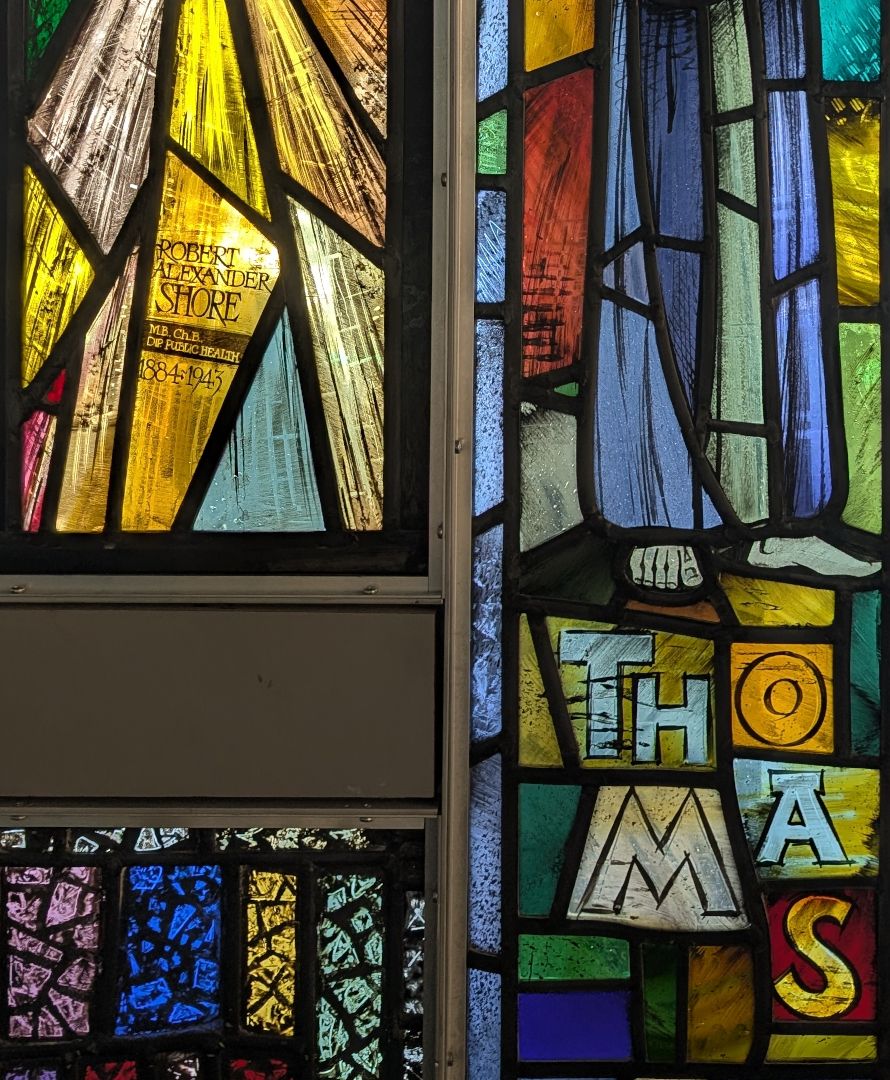
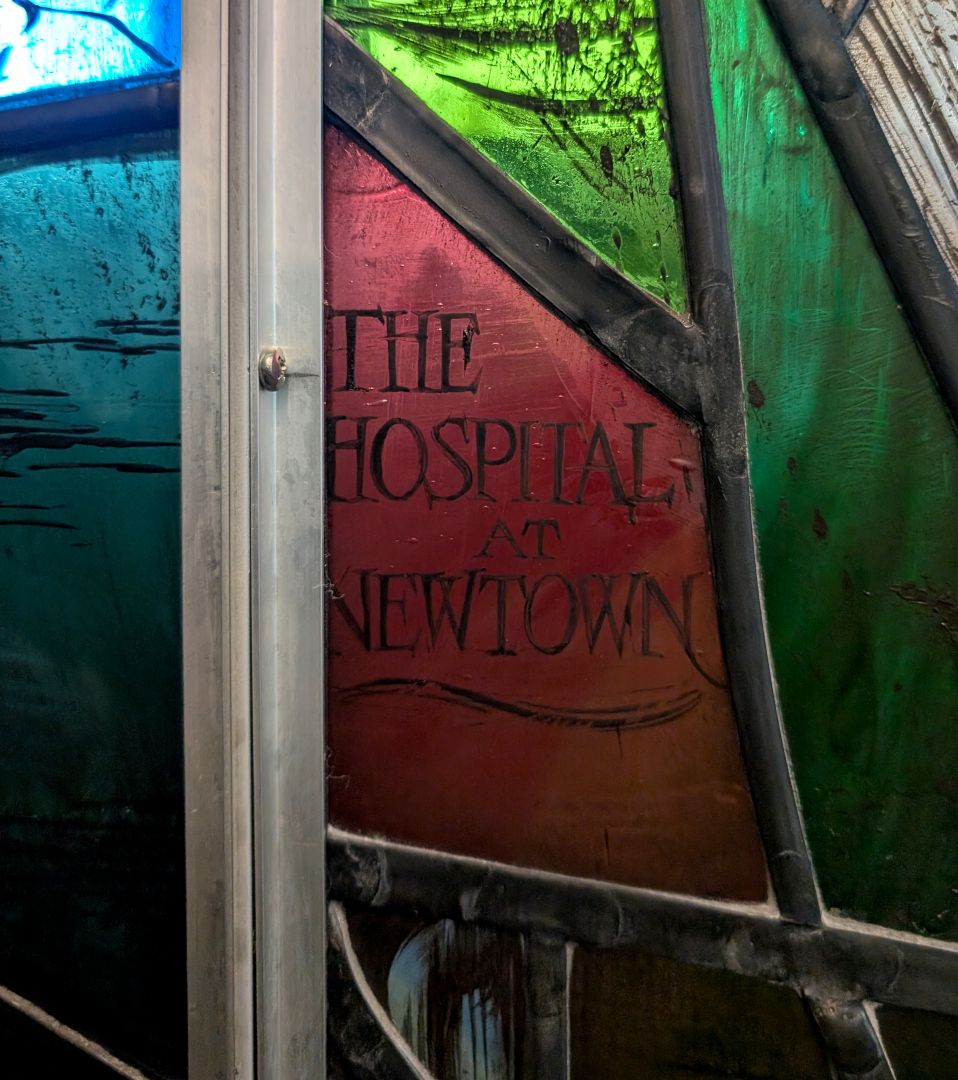
- DETAILS
- MAP
Description
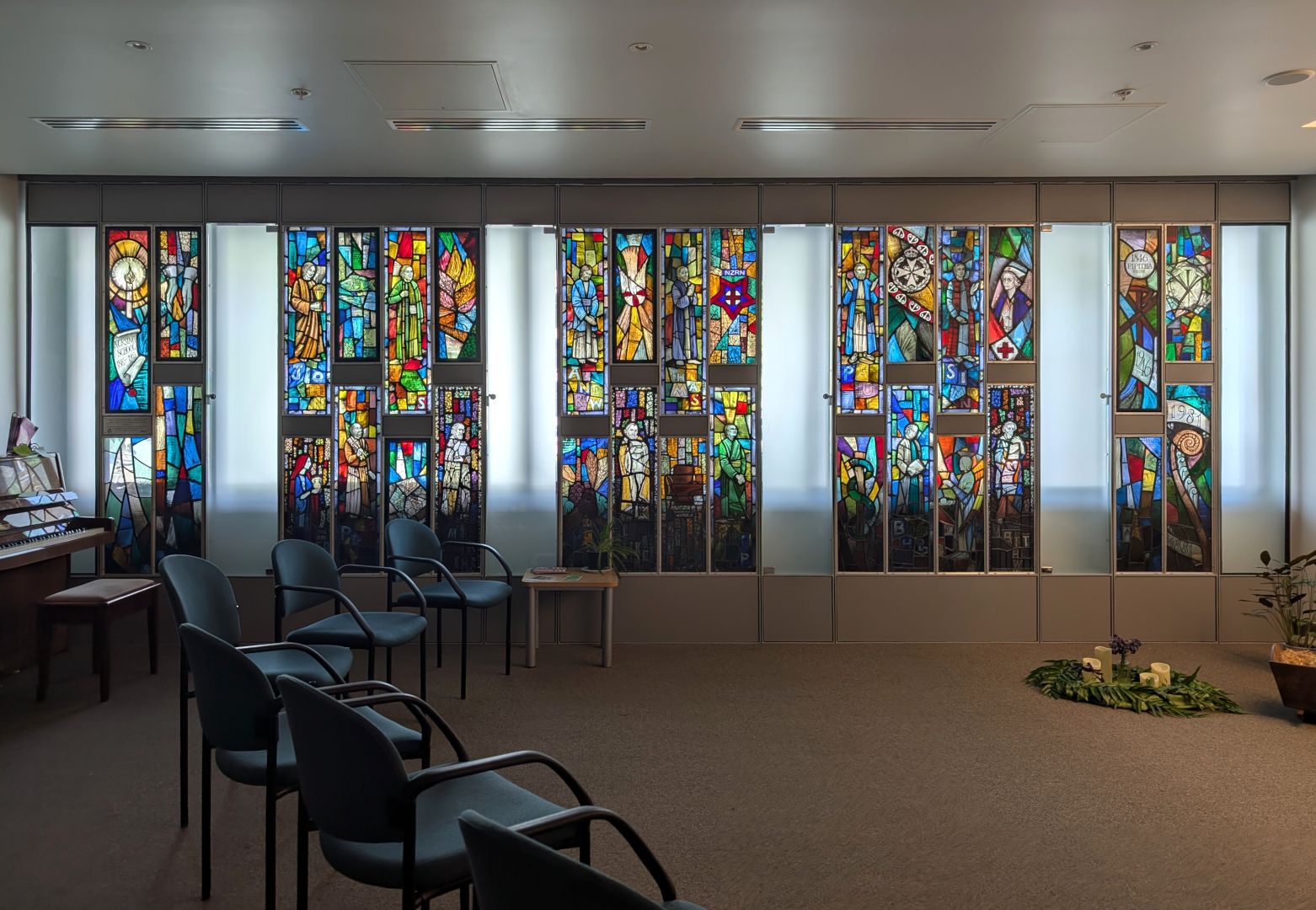
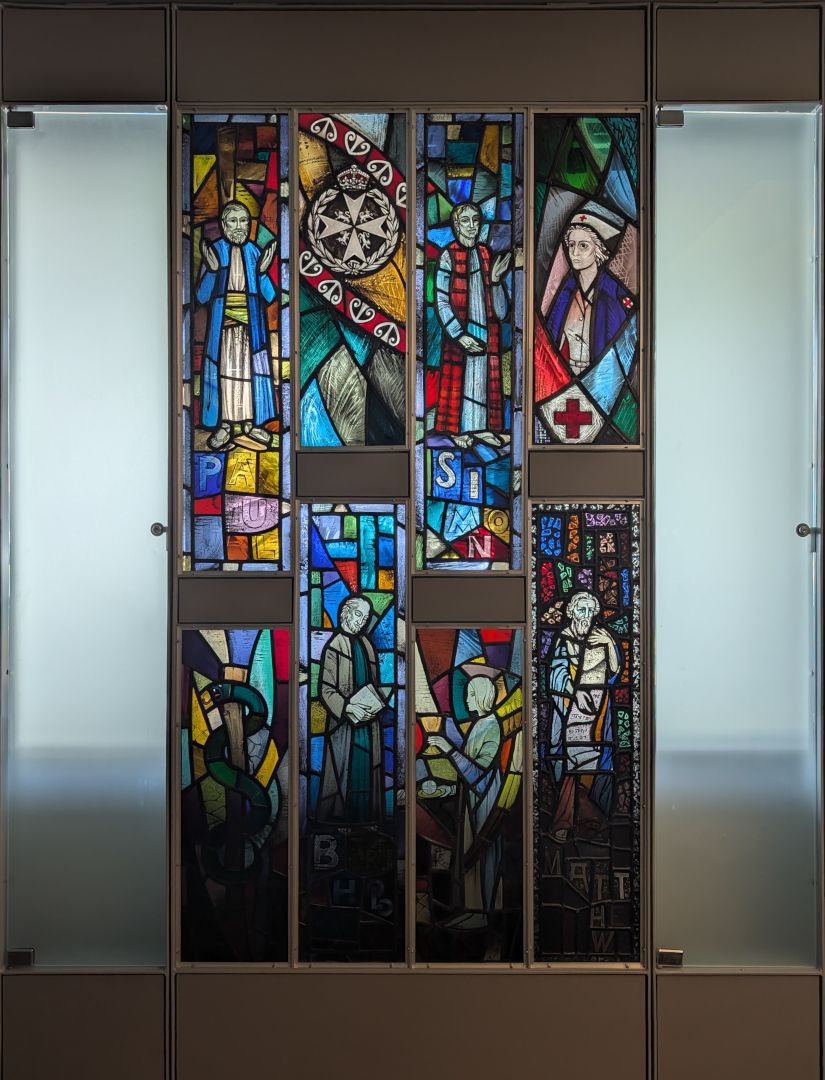
These 32 windows are part of an original set of 51 that were created by Martin Roestenburg and Beverley Shore Bennett for the original Nurse’s Memorial Chapel at Wellington Hospital.
They were originally set within four equally-sized bay walls, but have been reconfigured with aluminium frames to fit the space within this new chapel, which opened in 2010.
As Annette Stevenson has recorded, the Nurses' Memorial Chapel at Wellington Hospital was only one of three chapels in New Zealand dedicated to the memory of nurses. Planning began in 1933 and extensive fundraising commenced in 1934 using the profit from a nursing reunion. This was led by the Wellington Hospital Nurses Reunion Association and Nurses Memorial Chapel Fund (est 1934), which was later incorporated as the Wellington Hospital Nurses Reunion and Chapel Association in 1961. Donations of money were received from individuals, patients, bequests, community appeals and house-to-house collections. By 1961 £28,000 had been raised (equivalent to NZD $780,000 in 2024), enough to allow architects to draw up plans and to accept a tender for construction.
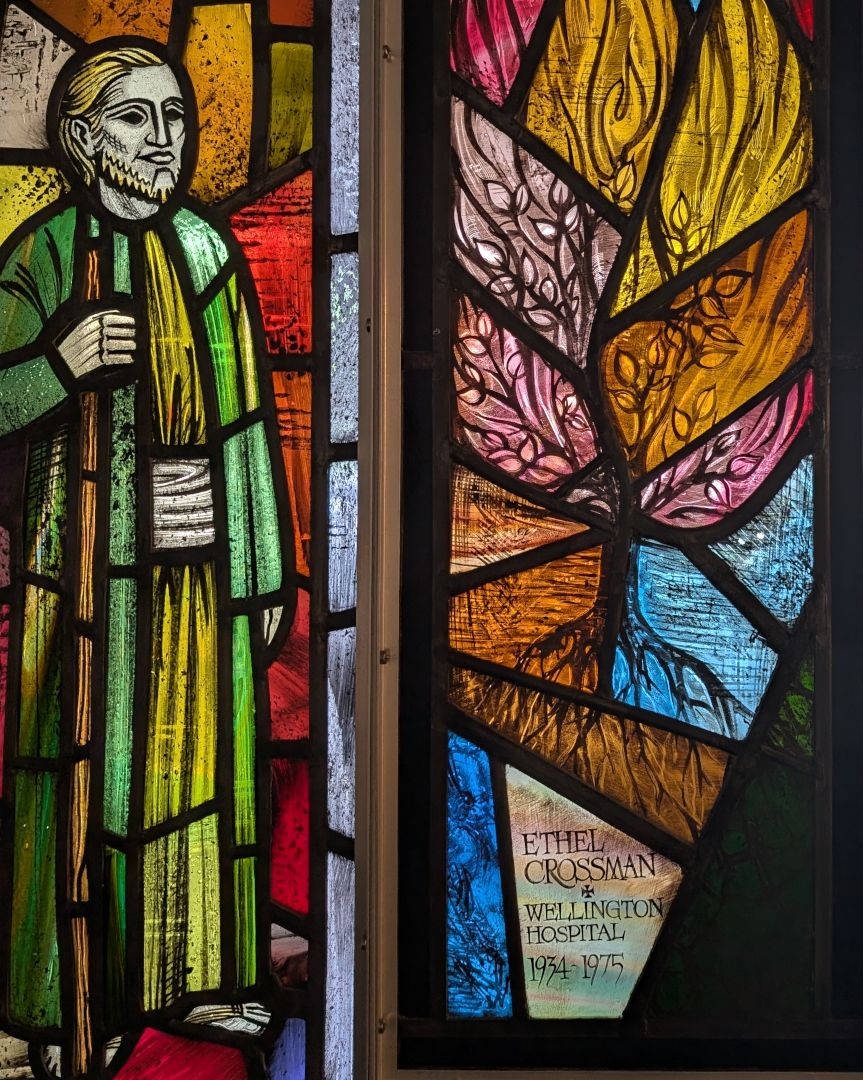
The chapel opened on 30 October 1965 with 72 plain coloured glass windows. However, over the next 20 years 51 of these were replaced with stained-glass windows designed by Beverley Shore Bennett and Martin Roestenberg: Shore-Bennett doing the figurative designs and Roestenberg, the abstract patterns. Martin Roestenberg made his own windows, and Beverley Shore-Bennett’s were made by Roy Miller and later Paul Hutchins of Miller Studios in Dunedin who executed and produced the windows designed by Shore-Bennett.
Nine windows were installed in 1965; 33 added in 1971; and nine more over the next 14 years. By 1985, all 51 were in place. The remaining 21 were left as plain coloured glass.
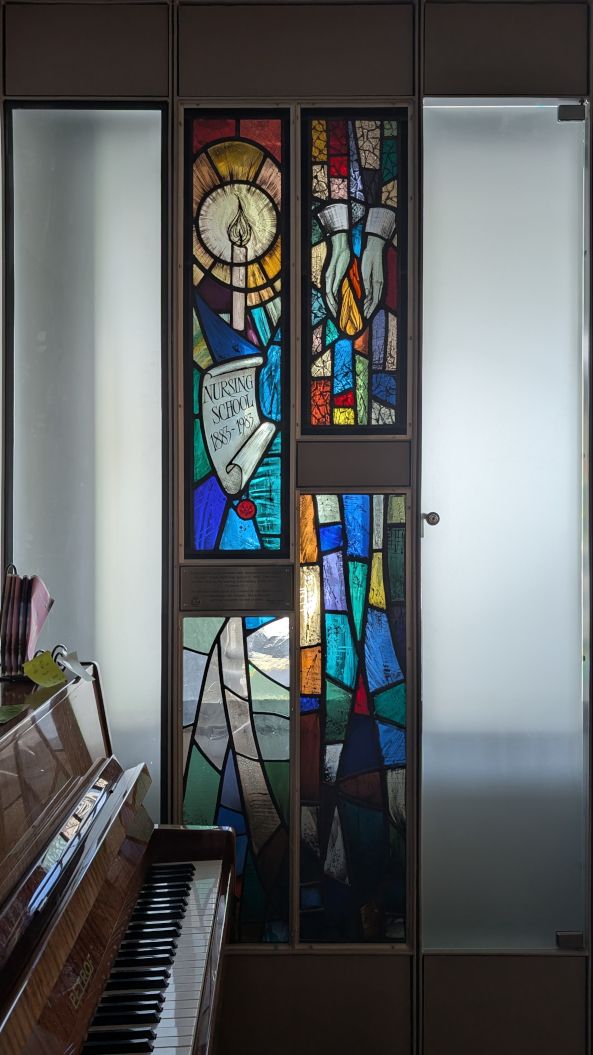
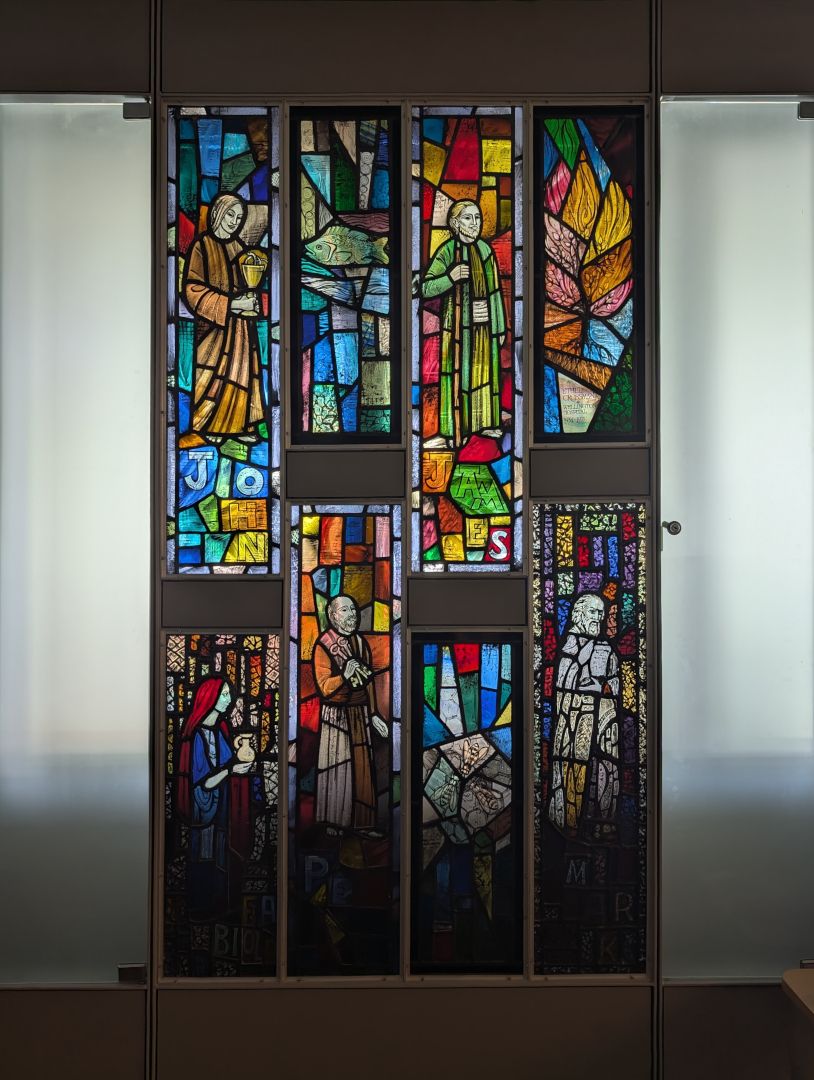
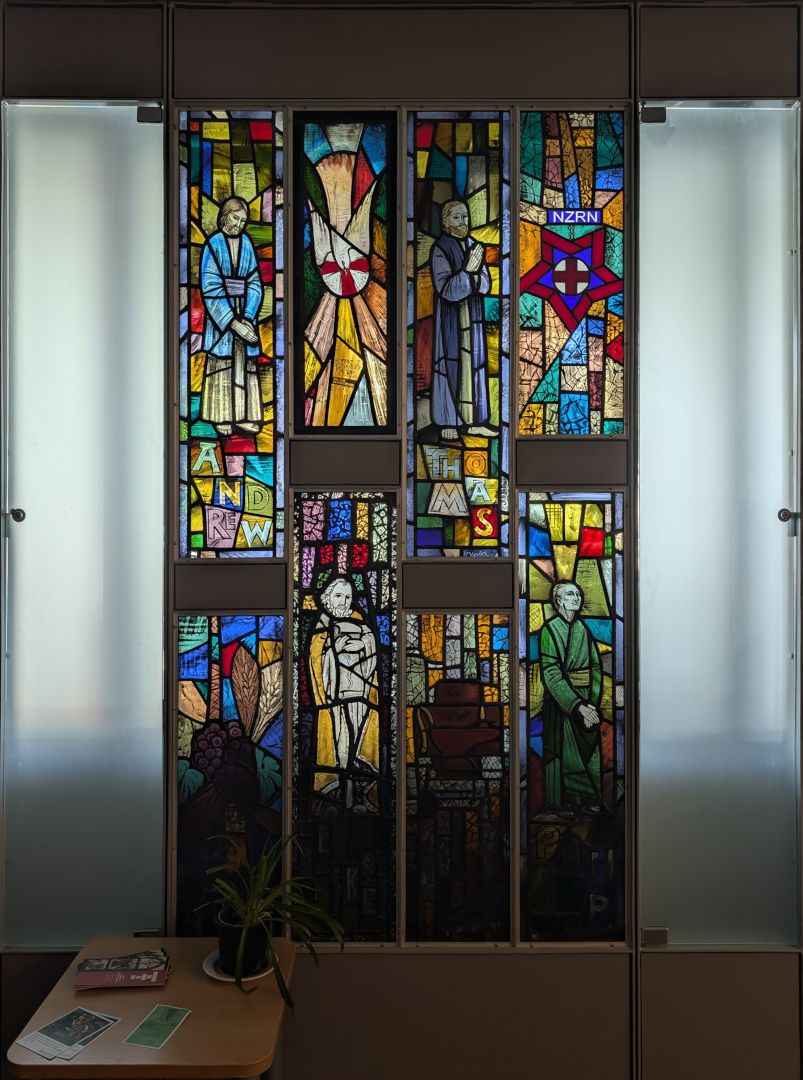
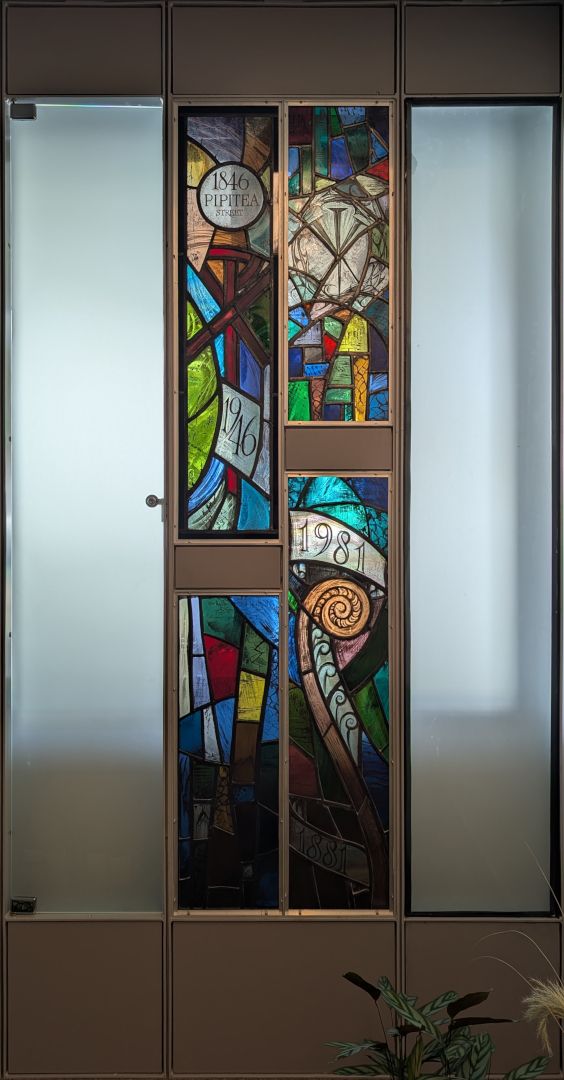
The north wall was divided by construction pillars into four bays of equal size which each contained 18 windows, a total of 72. The windows were arranged at five levels from floor to ceiling and each bay had the same symmetrical configuration. The subjects of and depictions in the windows were varied: saints and apostles, Saint Fabiola, Florence Nightingale’s lamp, the badge for NZ registered nurses, the original hospital at Pipitea St, the 1981 centennial of the hospital, the centenary of the School of Nursing in 1983, and the St John Ambulance which incorporate a kowhaiwhai pattern. Many were dedicated to former staff of the hospital.
The chapel was well-used for services attended by both staff and patients, and as a place for quiet reflection. However the number of religious services declined over the years and in 2000 the chapel became a Nursing Education Centre.
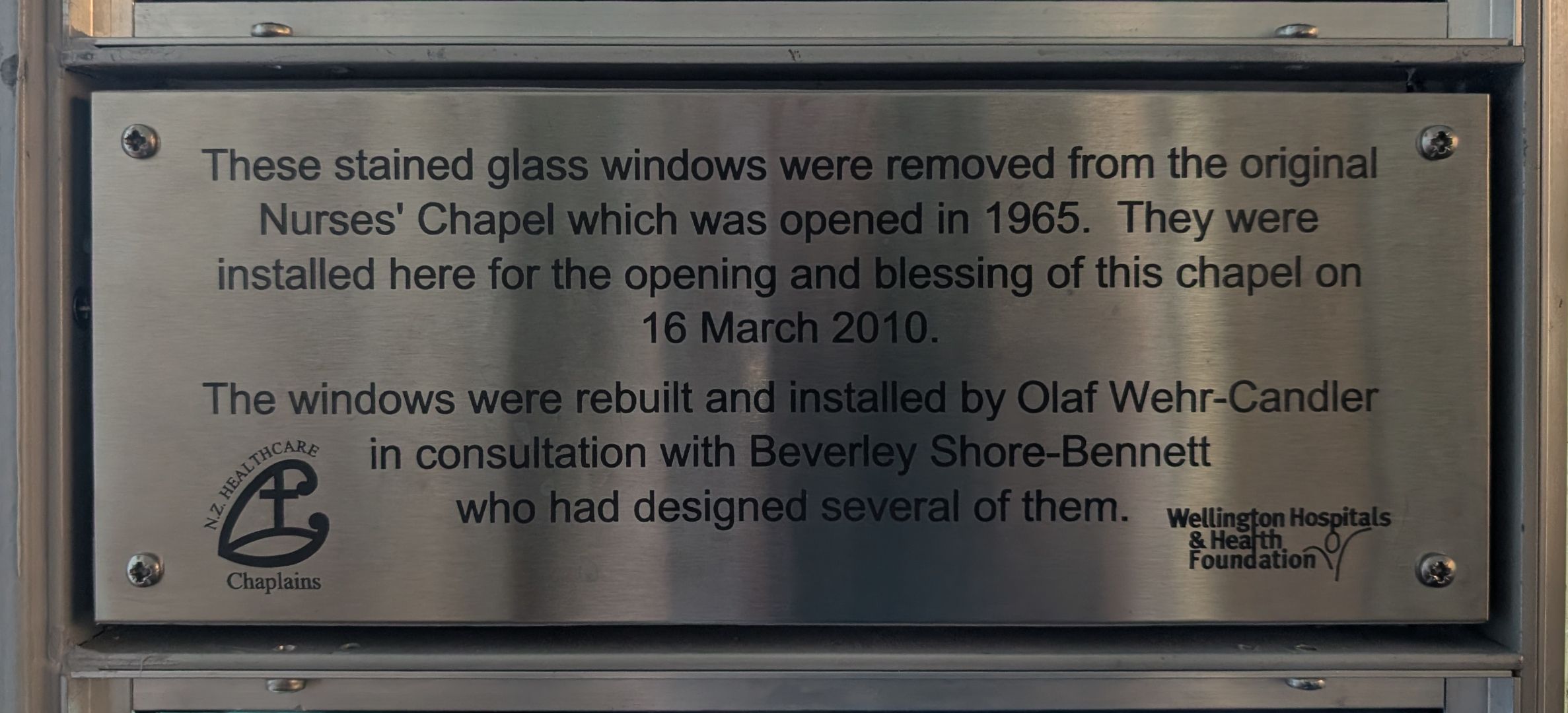
The chapel was demolished in 2004 to make way for redevelopment on the hospital site. The stained-glass windows were removed before demolition and stored until 2010 when 32 were re-installed in the chapel in the new hospital building.
According to the Wellington Hospital Chaplaincy Trust, at the time of demolition Olaf Wehr-Candler’s Pukerua Glass Studio Ltd was commissioned to photograph the windows, documenting the records of placings and essential dimensions before packing them away in wooden crates until the replacement chapel space could become a reality.
“At the 2010 dedication of the Chapel in the new hospital, the reappearance of the windows seemed almost miraculous, lighting a whole wall in their remembered glowing colours and shapes.
“It was fitting that the task of integrating them into the new building was undertaken by Olaf Wehr-Candler who had packed them so carefully away. Using the dimension records made at the time of storage he was able to create a two-dimensional pattern of the layout of the windows, particularly important because the new space was narrower than the original housing. This meant that not all the windows were able to be used (and some still remain in storage). The photographic records also assisted in creating a new relationship between the windows; it was found necessary to reject the original configuration in order to produce, within a smaller, reduced space, a balance between the abstract and figurative designs.
“Once the windows had been unpacked, an assessment of their condition was made. Although most were able to be re-installed without further treatment, some were found to need re-leading, a technical process requiring new lead runs to match the existing work. Repairing damage was a skilled job which took about six months. And then the windows were set in place. Of course, there were problems. Unfortunately, the wall of windows at 690cms long by 240cms-high did not allow all windows to be lit by external light, but given the overall parameters and constraining requirements of the exercise, the effect is remarkable.
“No visitor to this quiet space, so closely accessible to the busy, main thoroughfare of the hospital, can fail to be caught up in the quiet glow of the colours held within the firm lines of the leadlighting and in the steady peace of the place. The range of windows shines on, connecting us today with the vision of the artists, glassmakers and builders of that first Chapel.”
The exterior of the original chapel also featured a sculpture by Thomas Vincent Johnston, now lost (presumably destroyed).
The chapel is open at all times.
Chaplains are available 8am - 4pm, Monday to Friday
See also:
- ‘The Hospital Chapel’, Wellington Hospital Chaplaincy Trust website, 28 Nov 2011
- Jan Duke & Anita Bamford, 'Wellington Hospital 2003: A Photographic Essay' (Kapiti Print Media, Paraparamu Beach, 2003)
- Annette Stevenson, ‘Wellington Hospital Nurses’ Memorial Chapel’ (Palmerston North: Dunmore Press, 2001)
- View of Wellington Hospital buildings showing the chapel (1) | WCL Recollect