
Wharepapa Rakaihautu
John Mutu
1997–Current
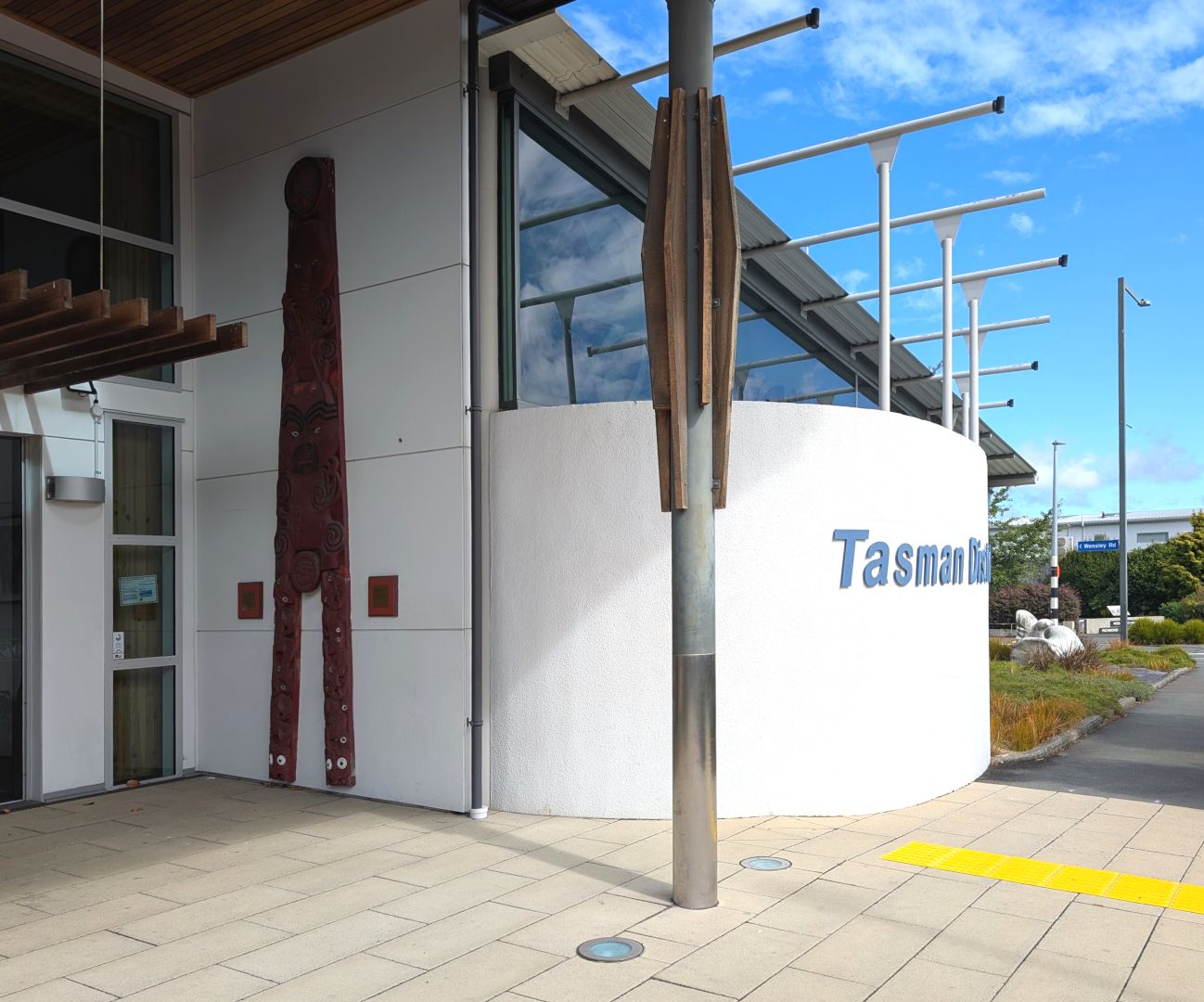
- Entrance to Tasman District Council office, 189 Queen Street, Waimea Richmond, Te tai o Aorere Tasman District
Type
- Whakairo
- Wall Mounted Sculpture
Medium
- Wood
Dimensions
- H4360 × W870 × D130mm

John Mutu, ‘Wharepapa Rakaihautu’ (1997), Tasman District Council Office, Waimea Richmond, Te tai o Aorere Tasman District
Image: Bronwyn Holloway-Smith, Public Art Heritage Aotearoa New Zealand, Feb 2025
- DETAILS
- MAP
Description
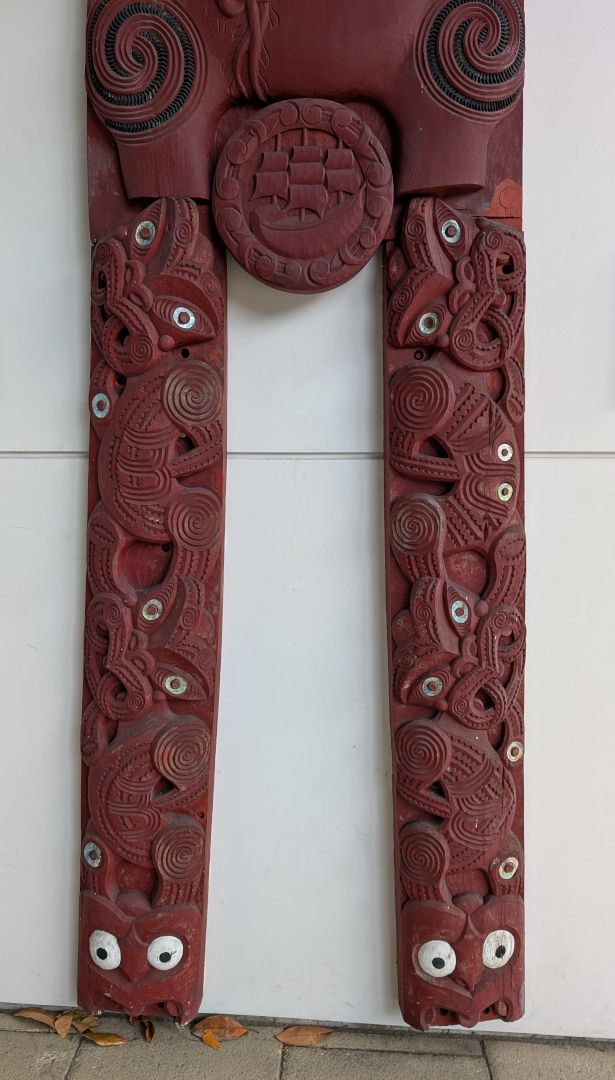
This carved poupou was created for the Tasman District Council. It commemorates the dedication of Kehu, who was a scout and guide for Mr Charles Heaphy and Mr Brunner during the course of early survey and pioneering in the South Island’s unexplored West Coast areas. Much has been written about these two early pioneers, but very little about Kehu whose efforts in guiding and survival contributed a great deal toward the success of those expeditions into the annals of New Zealand’s South Island history. The Tasman District Council commissioned this carved representation of Kehu and his exploits, along with informative text about the work, for the edification of the uninformed.
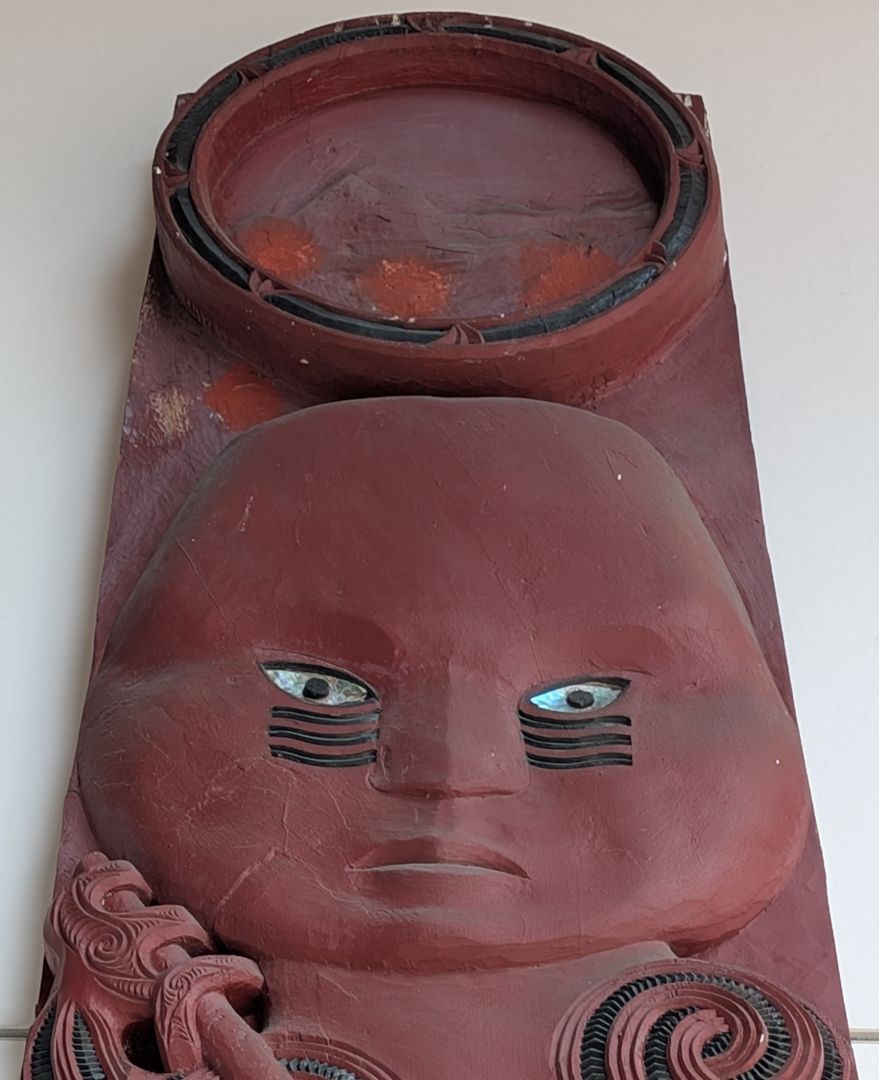
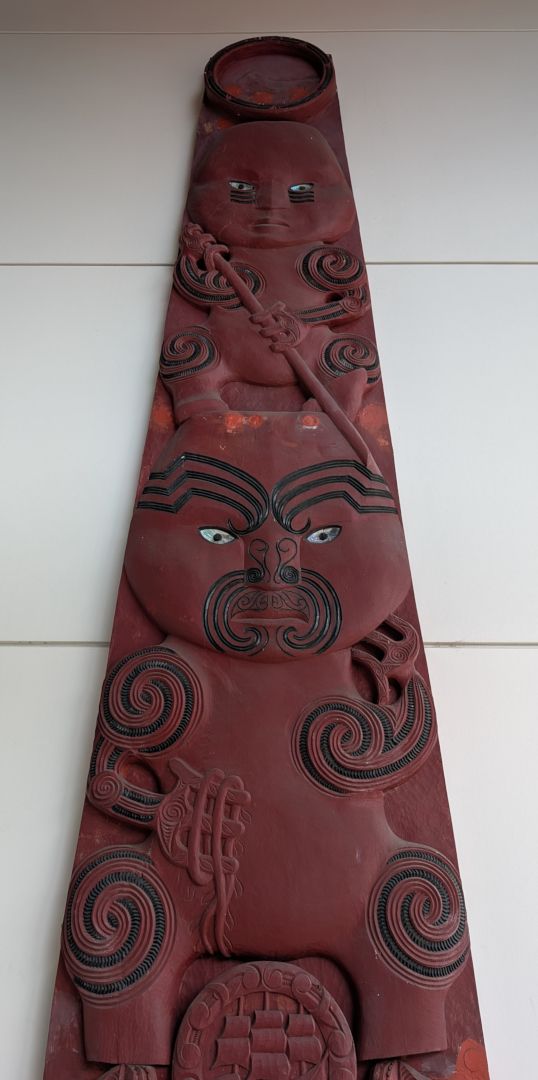
The mountain Wharepapa (Arthur Range) is at the very top of the carving.
The topmost figure is Rākai-Hau-Tū, known and recognised as the mythical digger of the lakes of the South Island. He holds his digging stick, named Tū-Whaka-Rōria, with which he reputedly formed those lakes, he is the Tupuna or founding ancestor of the Waitaha tribe of the South Island, his canoe is Uruao Waka.
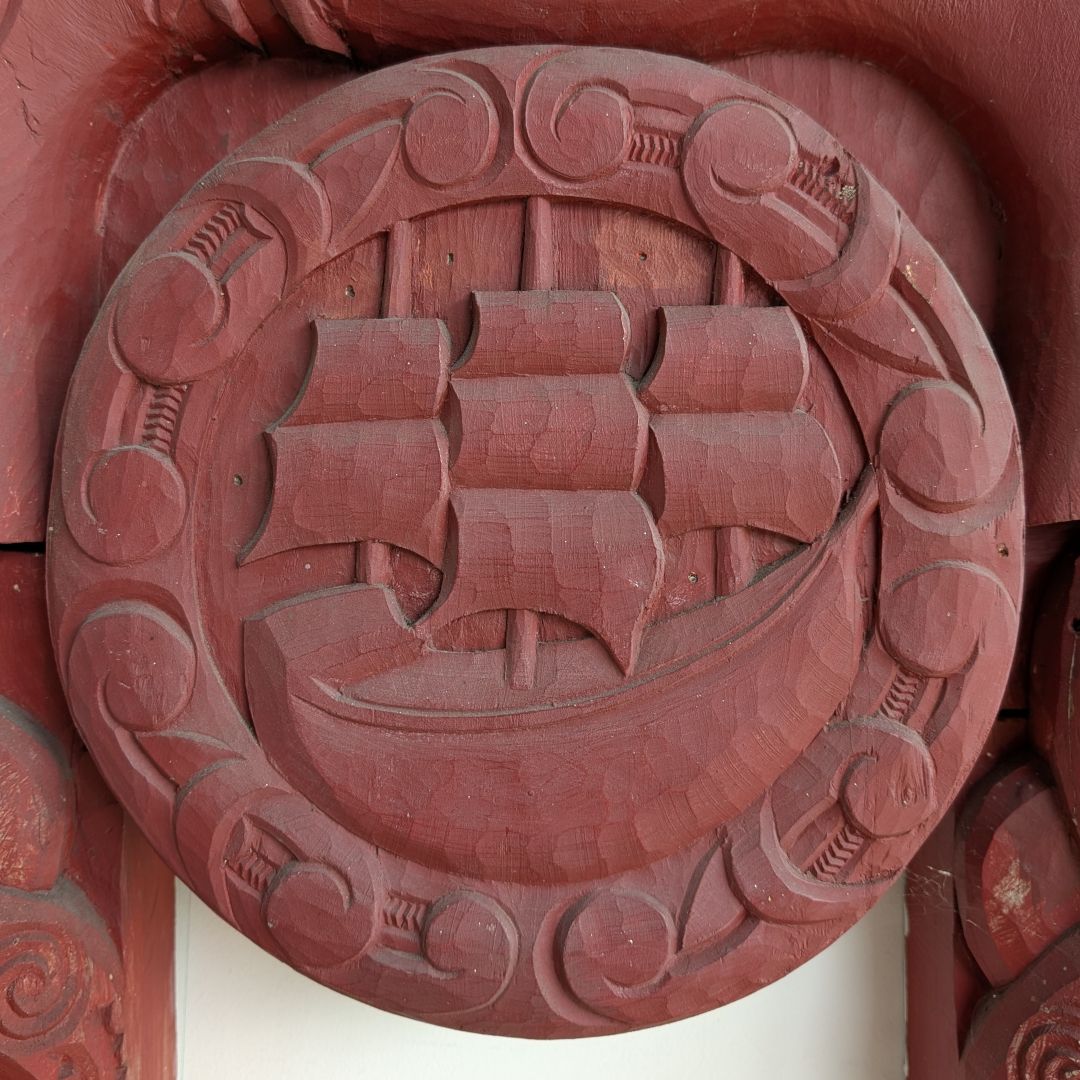
The carved central figure is Kehu the Māori scout and guide who accompanied Mr Charles Heaphy on many expeditions into South Island’s very wild and vast hinterland, ensuring his safety and on occasion carried Mr Heaphy on his back across rivers and rough terrain. It is believed that Kehu was a direct descendant of Kāti Rakai and Kāti Rapuwai who were the early tribes of the South Island, and whose links are very strong with present day Kāti Māmoe, Ngāti Apa, Rangitāne, and Ngāti Kuia. Kehu is carved with his Taura-Whiri-Nui (his binding rope) with which he used to scale cliffs and ford rivers, a rope that was at times the lifeline of Mr Charles Heaphy.
The carved Whaka-Wae or gateway supports represent the male and female guardians of the South Islands forests, rivers and lakes. The Maero or Turehu, recognised in Māori legend as the people of the mists (Spirit Guardians). These in turn are carved above two Koru which are again representative of belonging to that place, and they bite into Papatuanuku the Earth Mother of that area.
Source: P K (Kere) Graham, Historian and Master Carver Consultant
Two plaques are installed with the work.
The right-hand plaque reads:
Ko Wharepapa te maunga
Ko Rakaihautu te tangata
Ko Tuwhakaroria te ko
Ko Kehu te tangata
Ko nga waewae o tenei pou
Nga kaitiaki, mo nga roto,
me nga awa, me te ngahere
o Te Wai Pounamu
The left-hand plaque reads:
Wharepapa is the mountain
Rakaihautu, who dug the lakes
of the South Island, is the
top figure, holding his digging
stick “Tuwhakaroria”
Beneath him is Kehu, the guide
of the European explorers
Heaphy and Brunner
The supporting posts are
the guardians of the lakes,
the rivers and the forests
of the South Island.